Japan · Tokyo
Tokyo in 7 days: amazing neighbourhoods, good food and two Disney days
A week for Asakusa, Shibuya, Ueno and Shinjuku, food in Tsukiji, and Tokyo Disneyland and DisneySea. A daily itinerary with transport and booking tips.
GETTING STARTED
Five days to explore Tokyo and two for Disney: that is our proposal for a week full of varied experiences. Count seven full sightseeing days, excluding arrival and departure. The parks fall on days 3 and 5, with Ueno between them for a change of pace. Want just one park? We show you how to adapt.
Who it is for: First-time visitors to Japan who want to combine the city with both Disney parks without turning their holiday into a race.Before day 1: arrive, breathe and discover your neighbourhood
After a long flight, a connection and a suitcase that seems to have gained weight by itself, your first commitment can simply be reaching the hotel. Have a meal near your accommodation, find your way to the station and save ticketed attractions until you are settled in. Your trip does not need to start with a race against the clock.
This itinerary covers seven full days at the destination. Arrival and departure days are excluded; your total trip length depends on your flights. During your sightseeing week, the order can change to accommodate tickets and closing days. Choose your Disney dates before fixing the rest, and avoid putting a park visit on the same day as a flight.
We will work by area: Asakusa on one day, Harajuku and Shibuya on another, then Ueno with Akihabara. This arrangement is an editorial suggestion to reduce backtracking. It is not a promise to see all of Tokyo — it is a way to come home with better memories than a collection of ticket gates.
Day 1 · Asakusa, a temple and time to notice the details
Start in Asakusa and let Kaminarimon gate mark the entrance to your outing. Follow Nakamise towards Senso-ji, browsing the shops without turning every window into a mission. The temple and shopping share the itinerary but call for different behaviour: in the religious area, follow signs and respect those who are there to pray.
The pleasure of this first day lies in staying somewhere long enough to notice its changing pace. See the temple, explore the surroundings and choose souvenirs that actually catch your eye. You do not have to leave Asakusa with a full shopping bag or squeeze in Shinjuku before lunch.
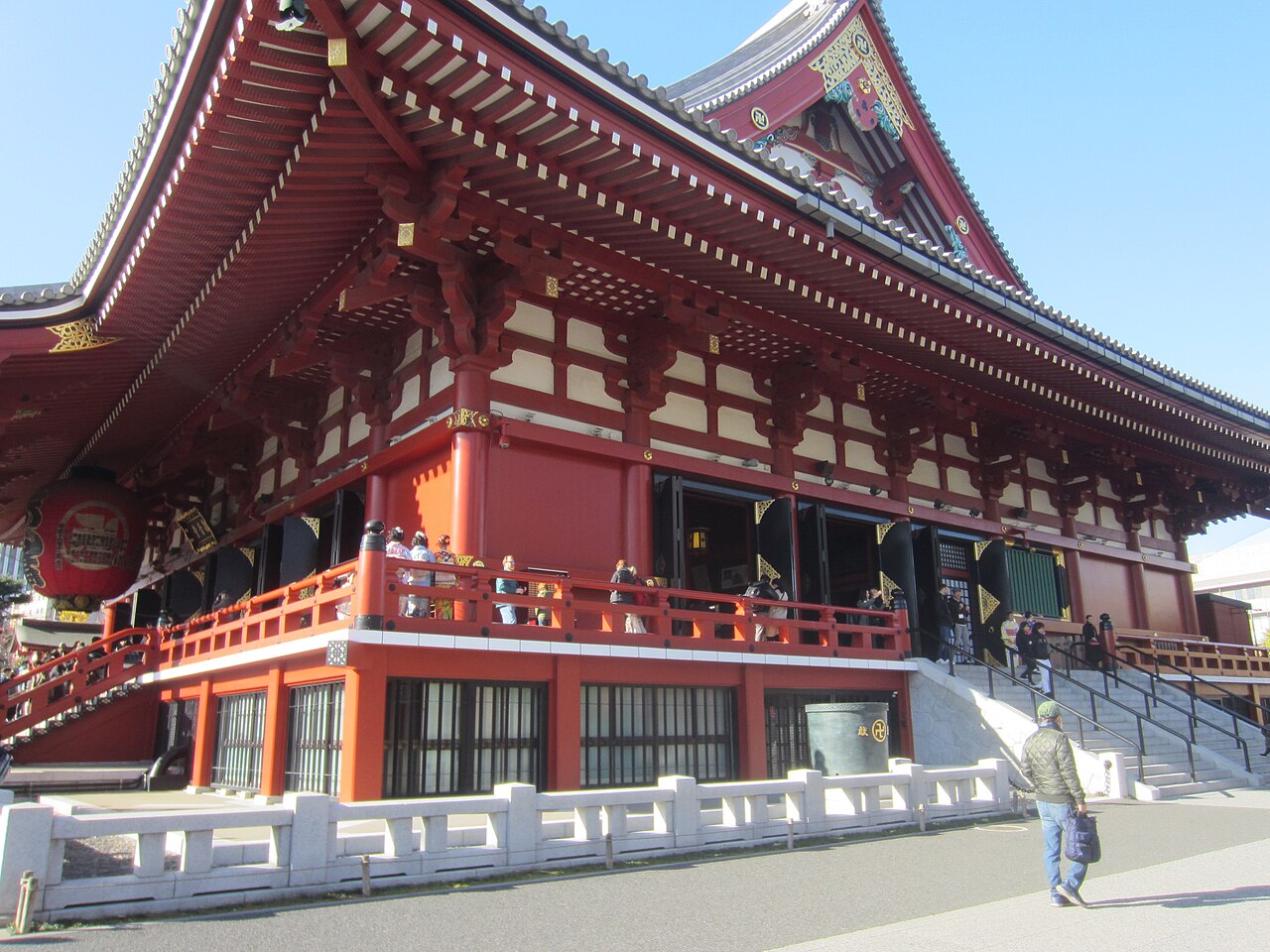
Senso-ji is the starting point for a day devoted to Asakusa.
Photo: Another Believer · CC BY-SA 4.0 · 2019 · image resized.
A break at Kagetsudo and a stroll by the Sumida
For a sweet break, put Asakusa Kagetsudo on your map. Its main shop is at Asakusa, 2-7-13, and its speciality is jumbo melonpan. The name is a good reminder that trying something different can be an attraction in itself: choose your food stop and enjoy it before chasing another sight.
The shop says it closes when the product sells out. For that reason, plan the melonpan stop after the temple and before heading to the river. If it has run out, take a break at another open shop around Nakamise; keep the outing in the area, without turning a snack into a cross-city journey.
Then head towards the Sumida River. The scenery opens up, and Tokyo Skytree becomes part of the view from various places nearby. Our suggestion here is to walk beside the river, rather than automatically adding a trip up the tower. If you want to visit it, treat that as another attraction, with its own travel, time and ticket.
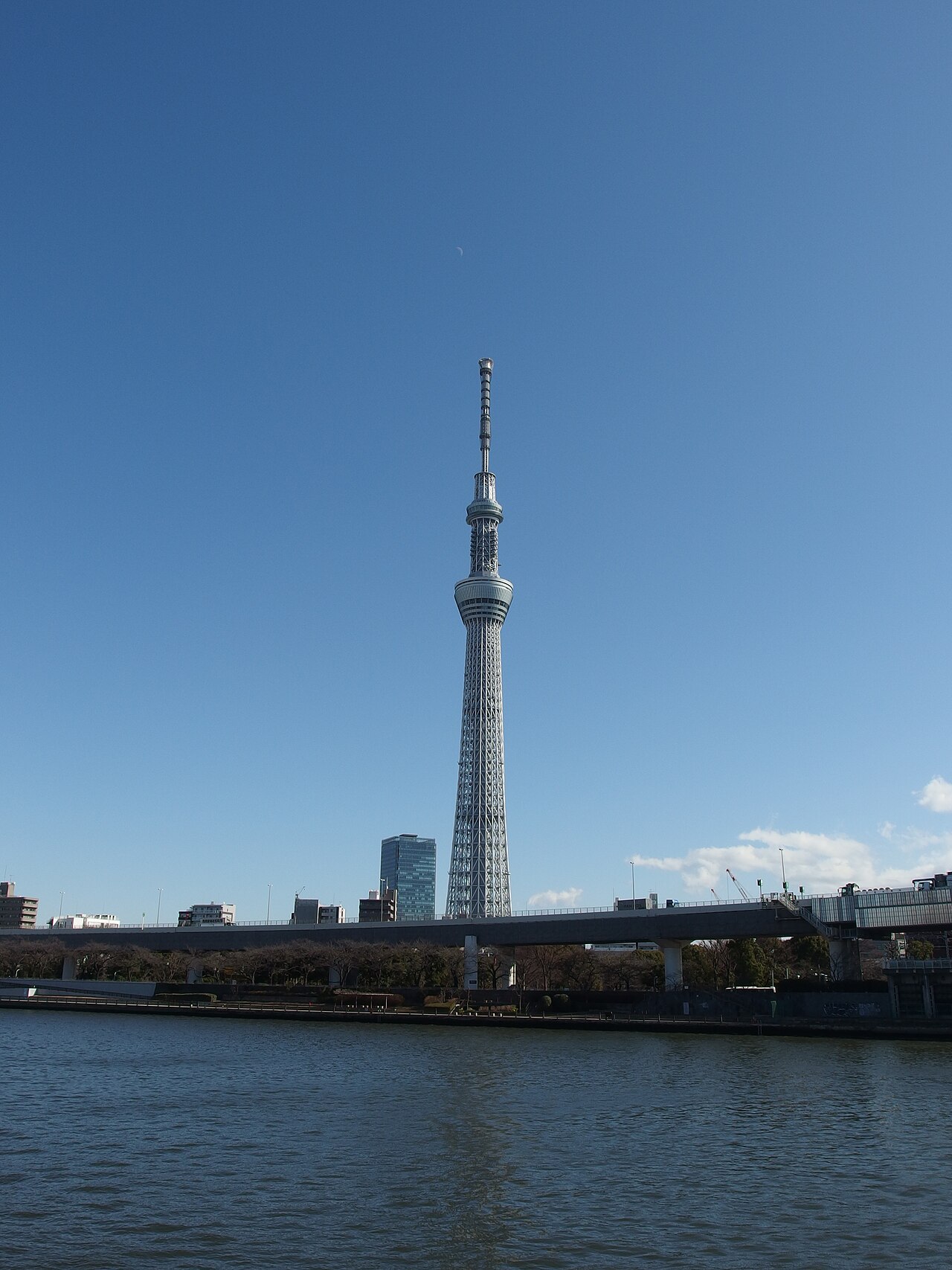
The scenery beside the Sumida brings a different pace after the temple.
Photo: Guilhem Vellut from Annecy, France · CC BY 2.0 · 2014 · image resized.
Day 2 · From Meiji Jingu’s greenery to Shibuya Crossing
Start at Meiji Jingu, the tree-lined shrine beside the Harajuku area. Take the walk slowly and follow signs in the religious grounds. Afterwards, cross into the Harajuku of shop windows and Takeshita Street: this change of scene is more rewarding when you leave room to look around, enter a shop and try something sweet without a huge list in hand.
At lunchtime, choose between staying in Harajuku’s streets and continuing to Omotesando. Our combination is the shrine in the morning, a food break and a stretch of Omotesando in the afternoon. If Takeshita Street’s bustle becomes tiring, drop that part and save energy for Shibuya; shops do not need to become an endurance test.
In the late afternoon, head to Shibuya by train, or on foot if you have the energy and the weather helps. See the crossing, then step away from the main flow to choose somewhere for dinner. The appeal at this time of day is feeling the neighbourhood change as the lights come on. We have not included a viewpoint with a fixed time slot, so you do not have to abandon a good break to rush to a booking.
Day 3 · Tokyo Disneyland: today’s itinerary has a castle
Today it is worth waking up with the park in mind. Reserve the whole day for Tokyo Disneyland and choose three priorities before leaving your hotel. One possible combination is Enchanted Tale of Beauty and the Beast, The Happy Ride with Baymax and “it’s a small world”. These offer different experiences; check restrictions and operating arrangements for your group before deciding.
Between priorities, check the app, take a break and explore along the way. Instead of promising ten attractions before lunch, choose your next one according to what is operating and the waiting times shown that day. For food, Tomorrowland Terrace is an option in the official guide; check the menu to see whether it suits your group.
Want to watch a parade or performance? Choose one listed for your date and check how admission works. Timing, maintenance and weather conditions can change your plans. In the evening, the suggestion is to stay in the park if you have the energy and there is a programme — without adding Shinjuku as “just one more quick stop” on the way back.
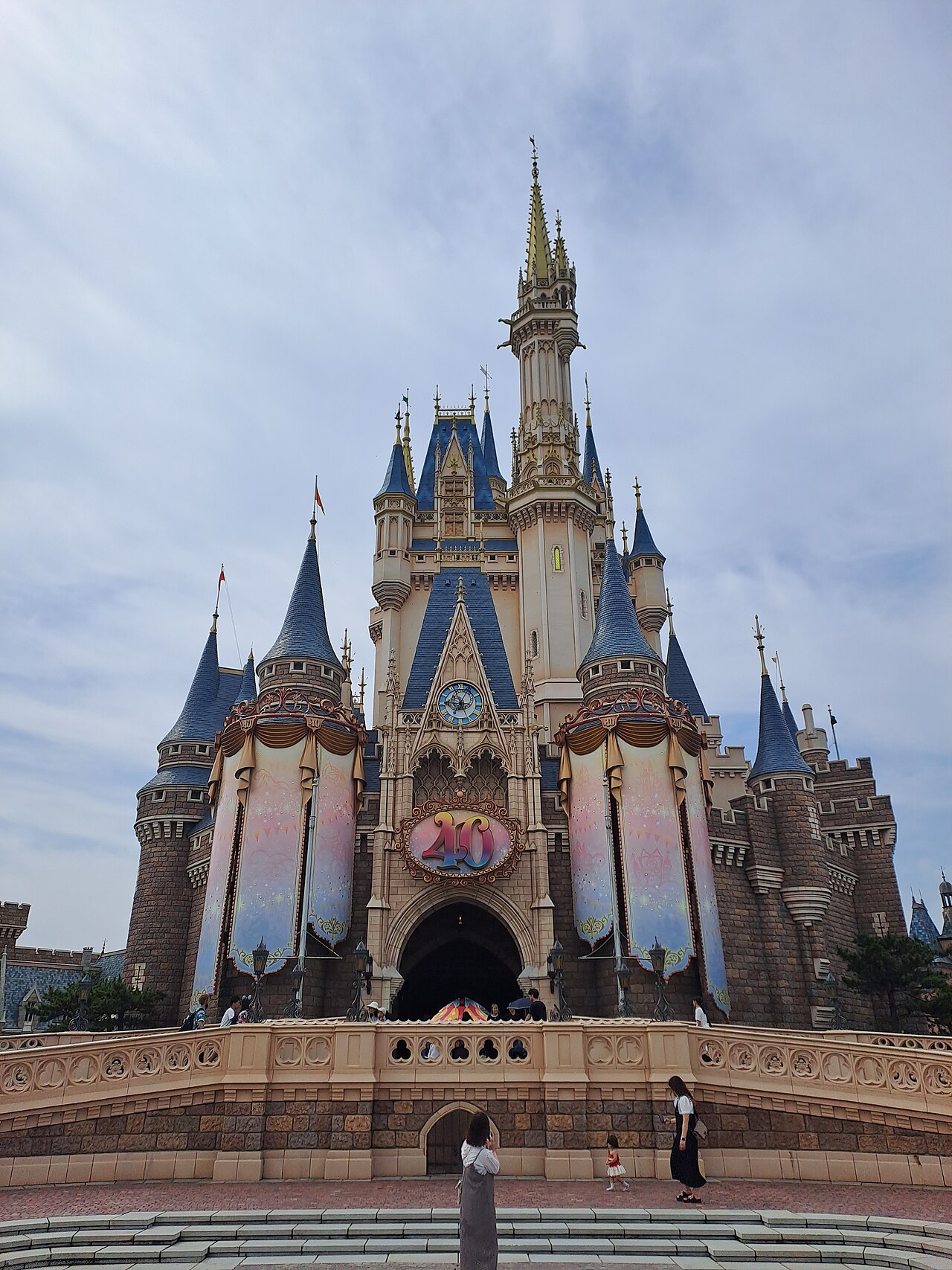
Tokyo Disneyland’s castle in 2023, with the park’s 40th anniversary decorations. The setting changes with the season.
Photo: LMP 2001 · CC BY-SA 4.0 · 2023 · image resized.
Day 4 · Ueno, Ameyoko and a detour into the world of games
After Disney, begin the day at a gentler pace. Ueno Park is your first stop: walk a little and decide whether to swap part of your outing for a museum. The area has several institutions, but do not try to visit them all; choose an exhibition that interests you and check its calendar before setting out.
For lunch and shopping, head to Ameyoko, towards Okachimachi. The area brings together shops and all kinds of food; it makes sense here to look at the options, compare menus and sit down to eat. If your legs ask for a long break, that is fine: this day was designed to leave precisely that room.
In the second part of the day, take the train to Akihabara. For anyone who enjoys games, manga and collectibles, Radio Kaikan is a good starting point for exploring. Set limits on shopping time and spending — your suitcase still needs to close. If that world is not your thing, stay in Ueno for your chosen museum and drop Akihabara from the day.
Day 5 · DisneySea, Fantasy Springs and a different side of Disney
On your second park day, it is Tokyo DisneySea’s turn. We suggest starting your wish list with Fantasy Springs, whose settings are inspired by Frozen, Peter Pan and Rapunzel. Choose what interests your group most and check each attraction’s rules; a ticket does not guarantee that you can experience everything on the same day.
When the official information was checked on 1 October 2026, Fantasy Springs had no special restriction on entering the area. Attractions could be accessed through queues or paid Disney Premier Access, when available. This detail deserves another check close to your visit: do not build your budget around an old rule found in a video.
For variety after Fantasy Springs, put Soaring: Fantastic Flight or Sindbad’s Storybook Voyage among your options and assess what fits your day. The park guide also suggests Casbah Food Court for a curry break. Leave room to wander and take in the settings; moving from one area to another is part of the fun too.
If you want to stay into the evening, check the current programme in the app and plan your return to the hotel before the shops distract you.
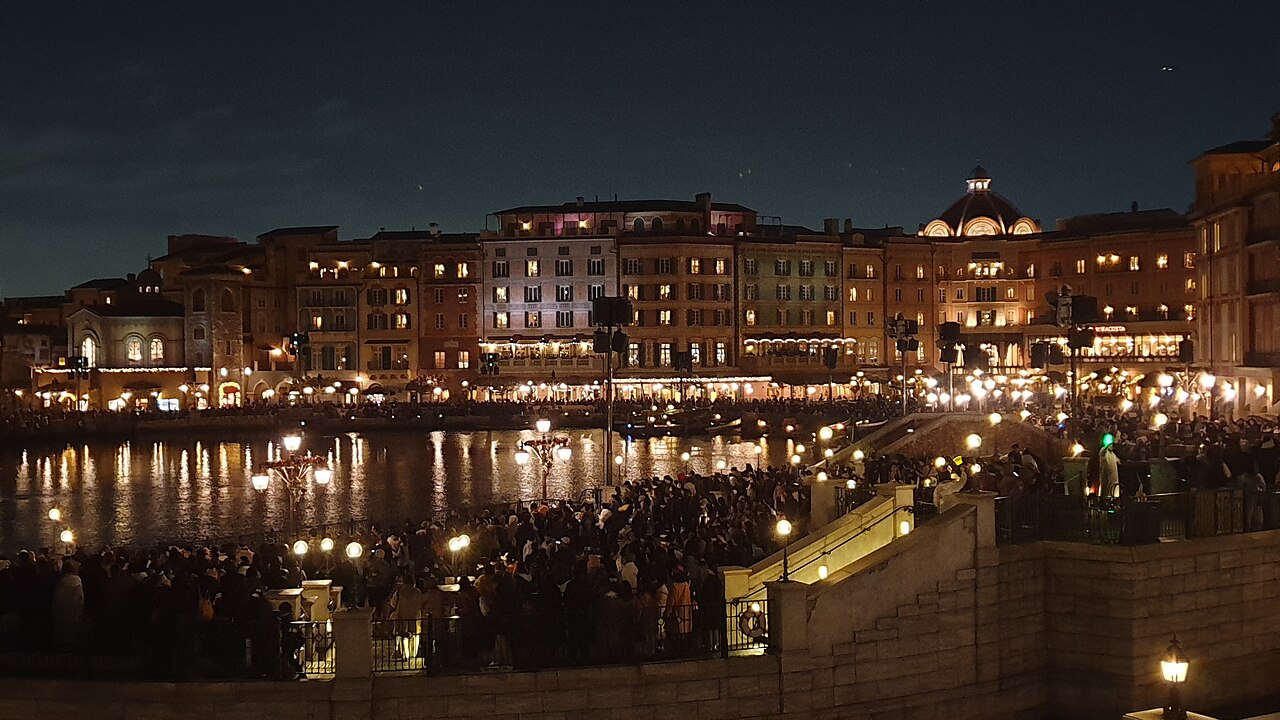
Mediterranean Harbor lit up at DisneySea, in a photograph from December 2019.
Photo: Cabeza2000 · CC BY-SA 4.0 · 2019 · image resized.
Day 6 · Shinjuku Gyoen: a breather after the theme parks
Before the illuminated façades, make room for Shinjuku Gyoen. The park brings together gardens in different styles: instead of trying to cover every path, choose part of the Japanese garden and take in the ponds and changes of scenery. The idea is to start the day with an experience quite different from what the neighbourhood offers later.
Visit in the morning or early afternoon, within the season’s admission hours. The garden usually closes on Mondays, with exceptions and holiday adjustments; check the calendar before choosing your day. If it falls on a closure, swap this outing with the Shibuya or Ueno day.
The photographs show the garden at other times. Do not assume the cherry blossoms or autumn leaves will peak on your exact day. Choose the outing because you want to discover the garden; if the season brings special colours, all the better.
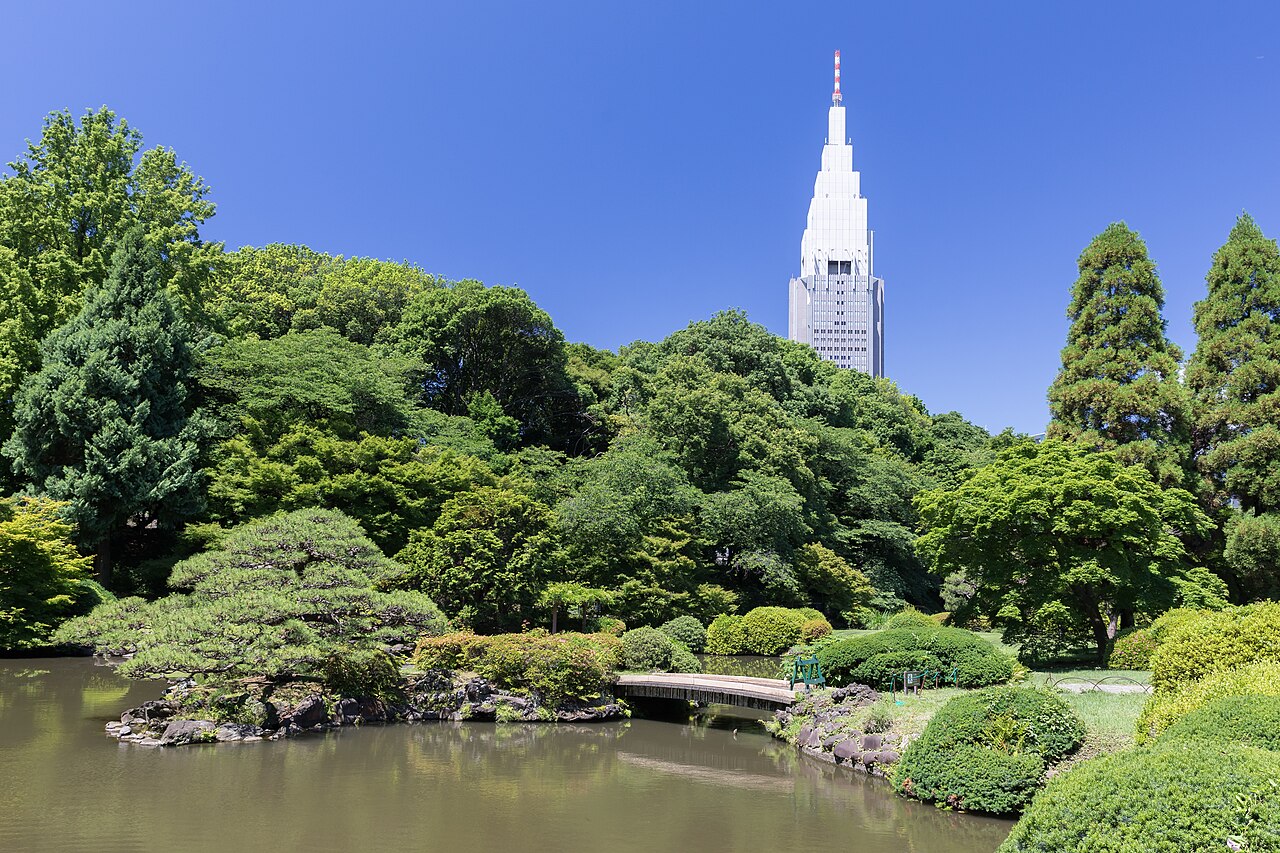
Greenery comes first: leave time to discover Shinjuku Gyoen’s paths.
Photo: Basile Morin · CC BY-SA 4.0 · 2019 · image resized.
After the garden, let Shinjuku change the scene
Leave the greenery and save the rest of the day for Shinjuku’s urban side. The official guide highlights the neighbourhood’s shops, tall buildings and entertainment. We suggest choosing a small area to explore, having dinner nearby and observing how the façades change as the lights come on. There is no need to turn the evening into a bar marathon.
Before going in to eat, look at the menu, prices and any charges stated by the establishment. Choose according to what you want to taste, rather than just the brightest façade. A relaxed meal ends the day better than spending the evening searching for a supposedly perfect restaurant.
If the garden is closed and you cannot change the order, keep the urban walk in Shinjuku and have dinner earlier. Enjoying the neighbourhood with energy is better than adding a distant attraction just to fill a gap. Tomorrow still brings a market and a good farewell to the city.
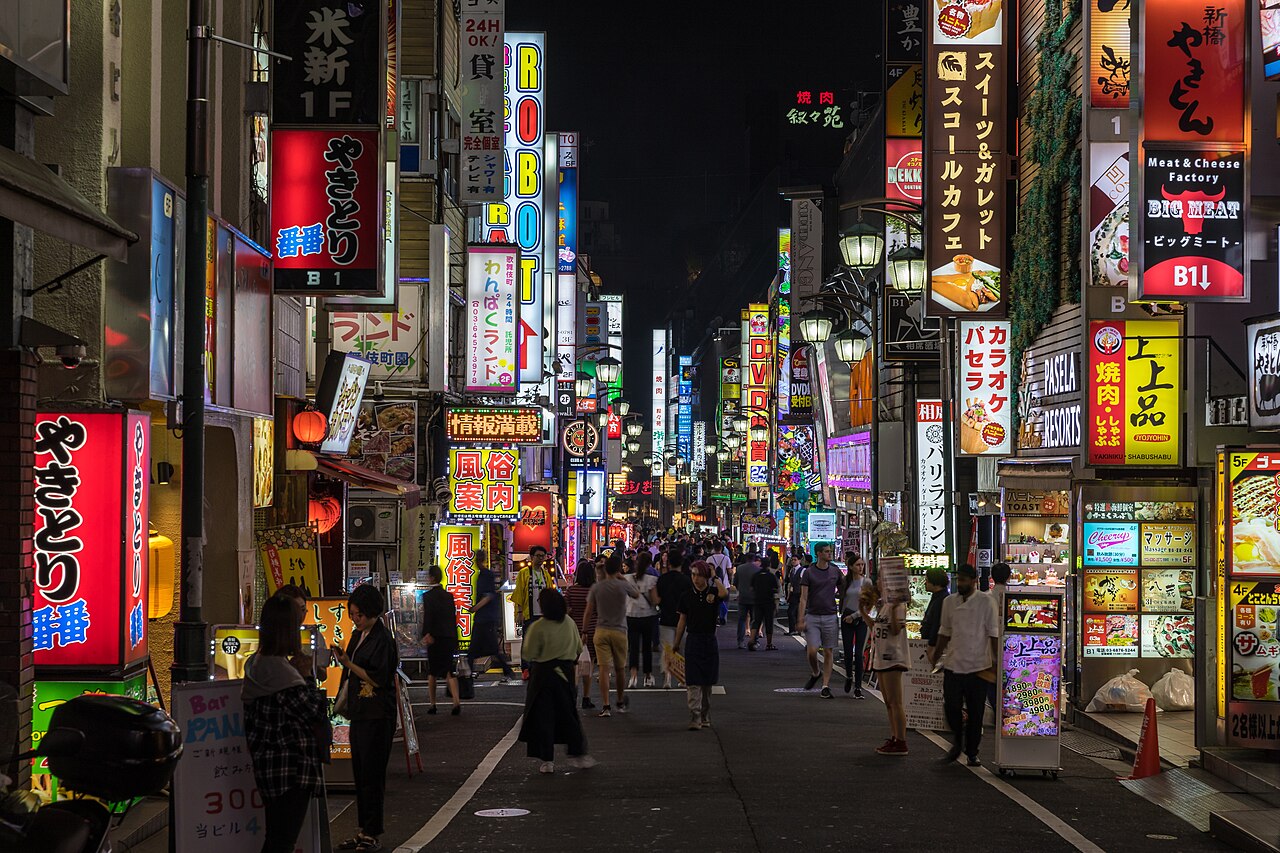
Illuminated façades reveal another side of Shinjuku.
Photo: Basile Morin · CC BY-SA 4.0 · 2019 · image resized.
Day 7 · Tsukiji for food, Ginza for a stroll
Start your final sightseeing day at Tsukiji Outer Market. The idea is to go in the morning, after checking the calendar and the opening arrangements of shops you intend to visit. Think of lunch as part of the outing: the official directory includes sushi, sashimi bowls and other meals, as well as items such as tamagoyaki. Choose according to what you want to try and the displayed price.
Afterwards, head to Ginza for a different kind of outing. Browse shop windows, see the Kabukiza façade and choose a department store, such as Ginza Mitsukoshi, to explore at leisure. Want to see kabuki? That requires a separate choice of performance and ticket, rather than guaranteed admission just because the theatre is on your route.
Leave late afternoon for the purchase you still need to make or a return to a café you enjoyed. This is a full sightseeing day, not your flight day: if you are flying today, shorten the programme and calculate your departure for the airport from your hotel. Do not let your final meal compete with check-in.
Disney in Japan: how to choose, book and get there
Tokyo Disneyland and Tokyo DisneySea are two parks within Tokyo Disney Resort. Each gets a day in this itinerary. If you dream of the castle and the attractions we chose for day 3, Disneyland is our suggestion; if Fantasy Springs and the settings on day 5 excited you, DisneySea may be your priority. This is a matter of taste, not a rigid divide between a “children’s park” and an “adults’ park”.
Buy your ticket for the chosen date and park through official channels. Prices and ticket types vary by day; check the final amount, age category and conditions before paying. The rule published when checked opens sales two months in advance at 14:00 Japan time, with an exception for months without the corresponding date. Use the official calendar to confirm when your date goes on sale.
Install the Tokyo Disney Resort App and test your login before the visit. Disney Premier Access is a paid service for certain experiences and time slots, subject to availability; it does not replace park admission or bypass every queue. Dining and shows may also use specific services. First choose what you want to do, then decide whether an extra is actually worth the cost.
For train travel, the official reference station is Maihama, served by the JR Keiyo and Musashino lines. Check the route from your hotel and, for DisneySea, the onward journey from Maihama and the Disney Resort Line. Include connections and walking: time on the train is not the same as time from your hotel door to the park entrance.
Prepare a backpack you can carry all day: a power bank, protection suited to the forecast and shoes you have already worn. Check admission rules and attraction restrictions for your group. The goal is to leave with the essentials sorted, rather than discover at the gate that your booking was for the other park.
Want just one park? Want to stay longer? Adapt the week
If you want to visit only one park, choose between Disneyland and DisneySea and turn the other day into two half-days: one for a museum in Ueno and one for shopping in Ginza. That also makes day 4 or day 7 more relaxed. If you prefer no parks, use those two dates to explore the areas you liked most more deeply, without having to repeat the same outings.
With eight or nine full days, our first suggestion is to separate Harajuku from Shibuya and give Ueno a day without Akihabara. These are two simple changes that create time for shops, museums and meals. A day trip outside Tokyo can come afterwards, with its own transport and attraction planning; we will not treat another city as just another neighbourhood.
Travelling with children or someone who needs more breaks? Keep one priority per part of the day and cut the second area of the day first. In this itinerary, Akihabara after Ueno and Shibuya after Harajuku are the easiest additions to remove. For accessibility needs, check the specific conditions of your route and attractions before finalising plans.
Visiting in late October 2026? There is a tasty itinerary swap
Will you be in Tokyo between 30 October and 3 November 2026? GO TOKYO announces Tokyo Ramen Festa at Komazawa Olympic Park. The event aims to bring together ramen styles from different regions of Japan — a good reason to let food guide part of your trip.
Komazawa Olympic Park requires a journey of its own. If the festival is a priority, replace part of your Ginza day or set aside an eighth day, checking the programme. Do not try to fit it in after Disney or treat it as a walk beside Senso-ji. This tip’s dates are for 2026; for another trip, check the relevant edition.
Where to stay, how to get around and what to budget for
For a week, begin by comparing options for a single base. Shinjuku or Shibuya may appeal if you want to end your evenings near shops and bustle; Ueno or Asakusa are worth comparing if the eastern and northern outings appealed to you more. Look at the exact address, the useful station and connections, not just the neighbourhood name in the listing.
Two Disney days do not require a hotel change. Compare the journey from your base with the cost and effort of moving accommodation. If you decide to stay near the parks, bring the two Disney days together and allow for check-out, luggage and the new check-in. This itinerary separates the parks to offer a change of pace, but the best order depends on where you sleep.
Budget in yen and by category: the actual number of nights, airport transport, urban journeys, two Disney tickets, meals and optional extras. Keep Premier Access and shopping separate so you can see what to cut. We do not present this total as a quote: use final prices for your dates and add a buffer for unexpected costs.
In Mala Inteligente, prepare your weekly checklist, including clothing for the forecast and battery power for park days. Save your hotel address and main routes for reference. And leave some room in your luggage: between a sweet treat, a souvenir and a shop in Akihabara, trips tend to pick up a few extra little passengers.
Which option suits you?
| Option | A good fit if… | What to consider |
|---|---|---|
| Both Disney parks | You want Disneyland and DisneySea, plus five days in the city. | Set aside two full days, two tickets and travel time. |
| Tokyo Disneyland only | The castle and the attractions on day 3 are your priorities. | Use day 5 for a museum or to give Ueno and Ginza more time. |
| Tokyo DisneySea only | Fantasy Springs and the settings on day 5 caught your attention most. | Use day 3 to visit Harajuku and Shibuya on separate days. |
| Eight or nine full days | You want more time for neighbourhoods, museums and breaks. | Separate Ueno from Akihabara and Harajuku from Shibuya before adding long journeys. |
Your itinerary, ready to save
Day 1 · Asakusa
Morning at Senso-ji and Nakamise; a break at Kagetsudo and an afternoon beside the Sumida River. Dinner in the neighbourhood or near your hotel.
Prefer an alternative? If the melonpan sells out, choose another open shop in Asakusa and keep your riverside walk.Day 2 · Harajuku and Shibuya
Meiji Jingu in the morning; Harajuku and Omotesando for lunch and a stroll; Shibuya in the late afternoon and dinner.
Prefer an alternative? If you prefer less walking, drop Omotesando or leave Shibuya for the day freed up by skipping one of the parks.Day 3 · Tokyo Disneyland
A full day at the park, with three priority attractions, a lunch break and the day’s programme checked in the app.
Prefer an alternative? If you only want DisneySea, use this day to explore Harajuku at a slower pace and visit Shibuya separately.Day 4 · Ueno and Akihabara
Ueno Park in the morning, lunch around Ameyoko and Akihabara in the afternoon for anyone who enjoys games and collectibles.
Prefer an alternative? Swap Akihabara for a museum in Ueno, chosen according to the programme and tickets.Day 5 · Tokyo DisneySea
A full day at the park; Fantasy Springs among your priorities, with time for other areas, a meal and whatever evening programme is available.
Prefer an alternative? If you only want Disneyland, divide the free day between a museum in Ueno and shopping in Ginza.Day 6 · Shinjuku
Shinjuku Gyoen during visiting hours; lunch, an urban walk and dinner amid the neighbourhood lights.
Prefer an alternative? If the garden closes on your date, swap with the Ueno or Shibuya day; check calendars before booking.Day 7 · Tsukiji and Ginza
Morning at Tsukiji Outer Market, lunch chosen from the market directory and an afternoon in Ginza, with room for shopping and one last break.
Prefer an alternative? If your trip coincides with Ramen Festa 2026 and you prefer the event, replace part of Ginza and plan your journey to Komazawa.Before you go
- Allow seven full sightseeing days, in addition to arrival and departure.
- Check your Disney ticket, park, date, attraction calendar and closing time.
- Install the official app, test your login and understand which extras cost money.
- Plan the journey from your hotel to Maihama and back; include connections and walking.
- Check the calendars for Shinjuku Gyoen, your chosen museums and Tsukiji shops.
- Budget in yen and separate tickets, meals, transport and shopping.
Questions to help you decide
Do the seven days include the flight and arrival?
No. These are seven full sightseeing days. Arrival, departure and flights are extra; check the local dates on your ticket to calculate your total trip length.
Can I visit both parks on the same day?
This itinerary allows a full day for each park. Ticket types and offers may vary by period, but we have not built the week around switching parks on the same day. Check the exact ticket type before buying.
Do I need to pay for Premier Access to enter Fantasy Springs?
When checked on 01/10/2026, the official website stated that there were no special restrictions on entering the area and that attractions could be accessed via queues or paid Premier Access, when available. A valid DisneySea ticket is required. Recheck the rule on the Fantasy Springs page close to your visit.
Which park is better suited to adults?
Choose according to the attractions you want to experience, rather than an assumed age group. In this guide, Disneyland includes the castle, Beauty and the Beast and Baymax suggestions; DisneySea brings together Fantasy Springs, Soaring and Sindbad. Both have attraction-specific restrictions to check.
Do I need to change hotels for Disney?
Not necessarily. Compare the journey from your base with the effort and cost of moving. If you prefer to stay near the parks, you can bring days 3 and 5 together, allowing for luggage and check-in.
What if I have fewer than seven days?
Choose one park or remove both; then reduce the areas according to your interests. Do not compress seven days into three. If Tokyo is a short stop within a longer trip around Japan, Asakusa and Shinjuku are still two possible areas to focus on, but they do not replace this full week.
Ready to start planning?
Organise my checklist in Mala Inteligente ↗Sources and editorial review
This is a researched guide, not a personal account of a visit. The itinerary suggestions are editorial recommendations. Confirm opening arrangements, prices and conditions close to your trip.
- GO TOKYO — Asakusa · checked 2026-10-01
- Senso-ji — official website · checked 2026-10-01
- Asakusa Kagetsudo — official shop · checked 2026-10-01
- GO TOKYO — Shinjuku · checked 2026-10-01
- Shinjuku Gyoen — gardens · checked 2026-10-01
- Shinjuku Gyoen — official visitor information · checked 2026-10-01
- GO TOKYO — Tokyo Ramen Festa 2026 · checked 2026-10-01
- GO TOKYO — October 2026 · checked 2026-10-01
- GO TOKYO — Harajuku · checked 2026-10-01
- GO TOKYO — Shibuya · checked 2026-10-01
- GO TOKYO — Ueno · checked 2026-10-01
- GO TOKYO — Akihabara · checked 2026-10-01
- GO TOKYO — Ginza · checked 2026-10-01
- Tsukiji Outer Market — official website · checked 2026-10-01
- Tokyo Disneyland — official website · checked 2026-10-01
- Tokyo DisneySea — official website · checked 2026-10-01
- Tokyo Disney Resort — Disneyland attractions · checked 2026-10-01
- Tokyo Disney Resort — DisneySea attractions · checked 2026-10-01
- Tokyo DisneySea — Fantasy Springs · checked 2026-10-01
- Tokyo Disney Resort — tickets · checked 2026-10-01
- Tokyo Disney Resort — preparation and calendar · checked 2026-10-01
- Tokyo Disney Resort — app and services · checked 2026-10-01
- Tokyo Disney Resort — getting there · checked 2026-10-01
- Tokyo Disney Resort — Disney Premier Access · checked 2026-10-01