Chile · Santiago, Chile, including Providencia
Five full days in Santiago: museums, viewpoints and Chilean food without a car
Five full days in Santiago with museums, Lastarria, Bellavista, viewpoints and Barrio Italia, by metro and on foot, with time to eat and rest.
GETTING STARTED
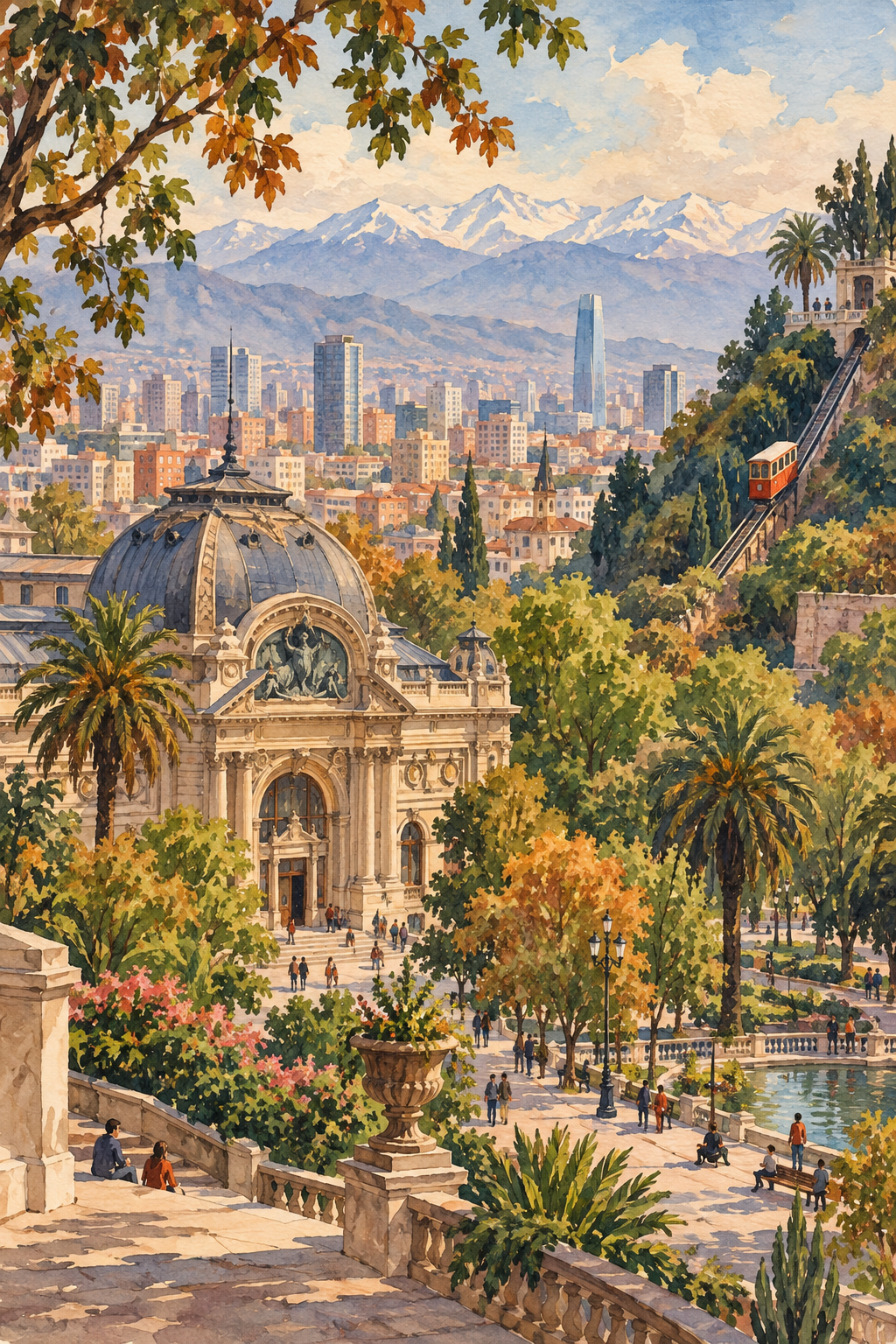
A Tuesday-to-Saturday itinerary combining the historic centre, Bellas Artes, Lastarria, La Chascona, San Cristóbal, Quinta Normal and Barrio Italia. It covers five full days, with arrival and departure counted separately, two food stops with verified addresses and alternatives for a slower pace.
Who it is for: Brazilians who want to explore Santiago with time for museums, neighbourhoods, viewpoints and Chilean food, using the metro and walking, with options for added comfort.Five days to explore Santiago with time between stops
You can spend five days in Santiago moving between the city's history, art, writers' homes and views from above without turning every outing into a marathon. The suggestion here is to start in the historic centre, continue to Bellas Artes and Lastarria, devote a day to Bellavista and San Cristóbal, visit Memoria and Quinta Normal, and finish with Santa Lucía and Barrio Italia.
These are five full days of sightseeing, with arrival and departure excluded from the count. The itinerary covers the capital, including La Chascona in Providencia, leaving other regions of Chile for another stage of the trip. The Tuesday-to-Saturday sequence helps accommodate the museums' published opening hours and lunch at Liguria Lastarria.
The idea is to focus on one main area each day, with a meal break and the freedom to finish the afternoon early. Two indoor visits are paired on the first day because they complement each other; on the remaining days, parks, streets and viewpoints give the outings a different rhythm. The alternatives below replace activities without adding a second list of obligations.
Lastarria as a base and an arrival day without fixed plans
For this itinerary, we suggest staying in Lastarria. The neighbourhood puts you close to Bellas Artes, Parque Forestal and other cultural stops, making it easier to return for a rest without crossing the city every day. Chile Travel lists Universidad Católica station on Line 1 and Bellas Artes station on Line 5 as access points for the area. When looking for accommodation, compare its address with these stations and the places you plan to visit; this selection does not assess individual hotels.
For your arrival, the municipal tourism website lists Centropuerto and Tur Bus buses with metro connections, as well as transfer services such as Transvip. If you are arriving with luggage and want fewer stages to organise, it is worth comparing transfer options. If you choose a bus, reconfirm the boarding point: the municipal information includes a temporary Centropuerto stop that may change.
Another possibility is Red services 555 and 444, which connect respectively to Pajaritos on Line 1 and La Cisterna on Line 2. They call at Intermodal Aeropuerto; free shuttle buses connect it with the terminals. Be sure to factor in this change when comparing options. Red reports that machines for buying and topping up the tarjeta bip! are available in the terminals and at the intermodal station. Allow yourself to handle the arrival without scheduling a visit on a tight timetable that same day.
Day 1: Santiago's history and the cultures of the Americas
Start Tuesday at Plaza de Armas and continue to Casa Colorada, at Merced 860. The Museo de Santiago presents the history of the inhabitants of the Mapocho valley through maps, scale models, archaeological objects and dioramas. It is a good first visit to provide context for the city you will explore over the following days.
Afterwards, set aside time for lunch before visiting the Museo Chileno de Arte Precolombino, at Bandera 361, also close to the square. The change in scale makes this an interesting pairing: you move from urban history to the cultures of the Americas. Divide the afternoon between América Precolombina en el Arte, Sala Textil and Chile Antes de Chile, giving the galleries more than a quick walk-through.
Casa Colorada lists its opening time as 10:00 and closing time as 18:00 from Tuesday to Friday. The Precolombino also closes at 18:00, with last admission at 17:15, from Tuesday to Sunday. We suggest arriving at the second museum with plenty of the afternoon still ahead. If two museums feel like too much, keep Plaza de Armas and Casa Colorada and finish sightseeing after lunch; the first day can end early.
Day 2: Bellas Artes, a Chilean lunch and an afternoon in Lastarria
On Wednesday, start at the Museo Nacional de Bellas Artes, at José Miguel de la Barra 650. Admission is free, and the collection allows you to devote the morning to art without having to move between several cultural venues. Take a look at the central hall too: the architecture is part of the pleasure of exploring the museum.
For trips between 8 October 2026 and 28 February 2027, the official programme confirms Enrique Ramírez. Te creo paisaje. It features 24 works, including videos, photographs and installations, exploring landscape, memory and displacement. It complements the collection well by bringing a different artistic language to the same visit. These are the exhibition dates; the October opening has already taken place.
When you leave, walk through Parque Forestal and head to Liguria Lastarria, at Merced 298, for lunch. The restaurant itself describes its cuisine as rooted in Chilean dining traditions, with décor referencing popular culture. This choice combines its food offering with a location along your route through the neighbourhood; check the day's menu before deciding what to order. The branch lists service from Monday to Saturday.
After lunch, continue to Plaza Mulato Gil de Castro and stroll through Lastarria. If you are staying in the area, take the opportunity to return early. If you would prefer more art, you can replace this walk with the Museo de Arte Contemporáneo beside Parque Forestal, mentioned in the municipal itinerary; check its opening arrangements before making the change.
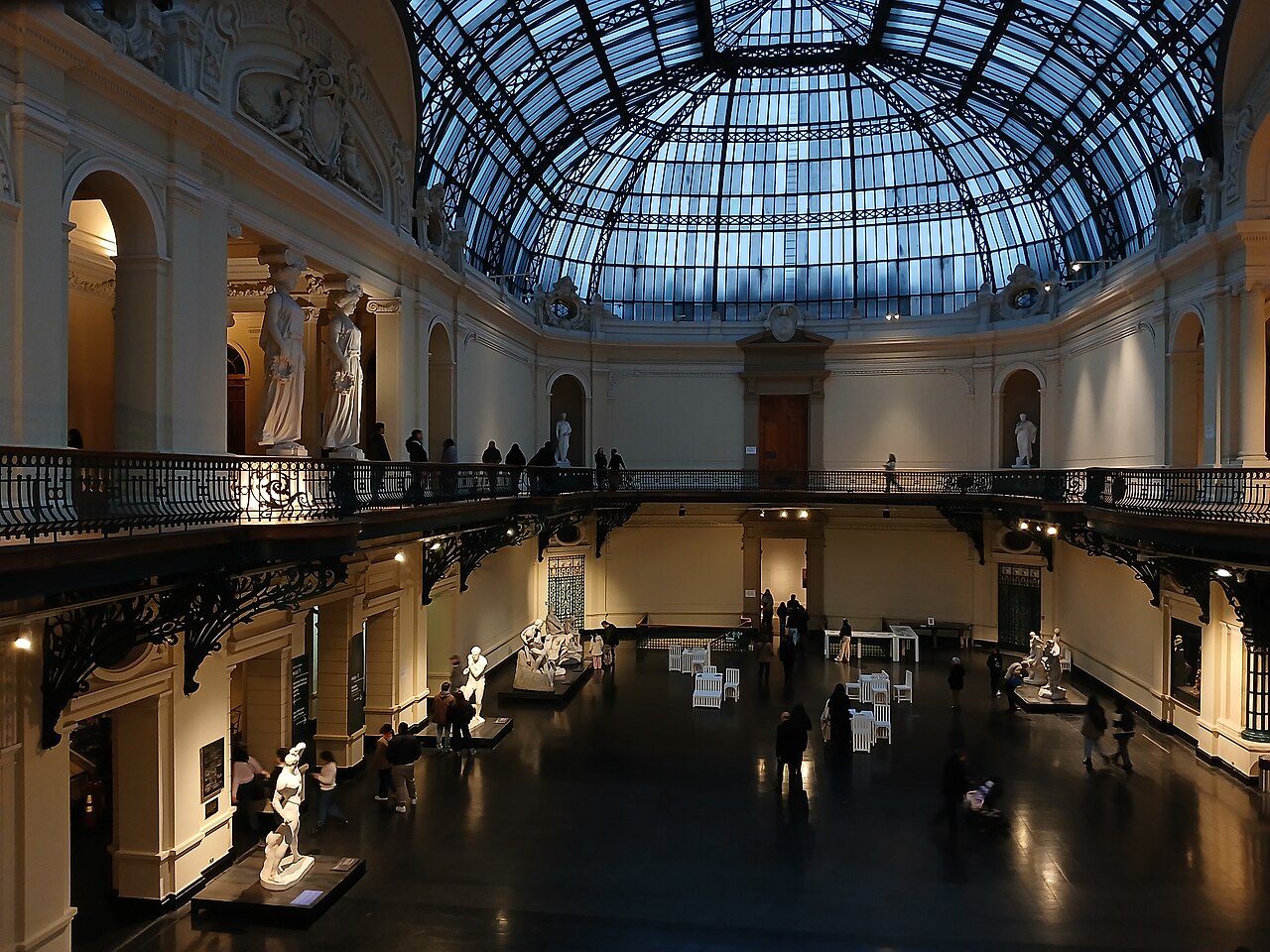
The hall at Bellas Artes also deserves a pause for a closer look between exhibitions.
Photo: Jorgebarrios · CC BY-SA 4.0 · 2025 · image resized.Photo source and license
Source: https://commons.wikimedia.org/wiki/File:Museo_Nacional_de_Bellas_Artes_de_Chile_(92025).jpgLicense: https://creativecommons.org/licenses/by-sa/4.0
Image processing: Miniatura de 1280 px do Wikimedia Commons; sem alteração de conteúdo.
Day 3, morning: La Chascona and Neruda's stories
On Thursday, head to Bellavista to visit La Chascona, at Fernando Márquez de La Plata 0192, Providencia. Chile Travel recommends Baquedano station, on Lines 1 and 5, for access to the neighbourhood; from there, continue on foot. Starting with the house allows you to leave the ascent of San Cristóbal until later, without trying to fit both visits into the morning.
La Chascona presents Pablo Neruda's life and work through objects and stories from the house he helped design and shared with Matilde Urrutia. The Portuguese audio guide, listed by the Pablo Neruda Foundation, allows you to follow the visit at your own pace.
Individual admission is on a first-come, first-served basis, without reservations, and the published opening hours are Tuesday to Sunday, from 10:00 to 18:00. Allow time for a possible wait and take a lunch break before continuing to Pío Nono. The archive photograph in this section helps put the visit in context, but the mural shown in it no longer exists.
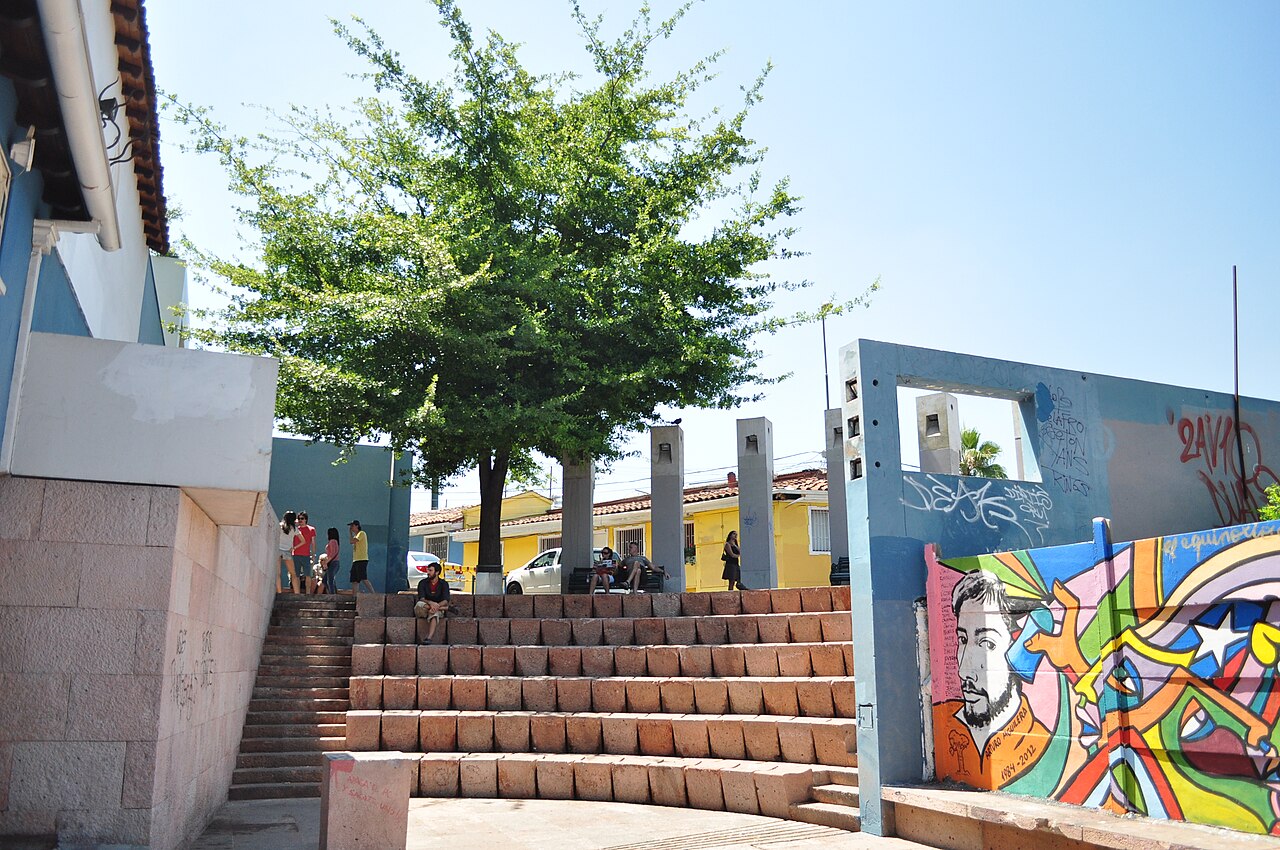
An archive photograph of La Chascona, a stop devoted to Neruda's life and work. The mural shown no longer exists.
Photo: Arturo Rinaldi Villegas · CC BY-SA 3.0 · 2012 · image resized.Photo source and license
Source: https://commons.wikimedia.org/wiki/File:La_Chascona_(1).JPGLicense: https://creativecommons.org/licenses/by-sa/3.0
Image processing: Miniatura de 1280 px do Wikimedia Commons; sem alteração de conteúdo.
Day 3, afternoon: San Cristóbal by funicular and a break at Café Tudor
After La Chascona and a meal break, head to the funicular at Pío Nono 450. It takes you to the upper part of Cerro San Cristóbal and saves you the effort of walking all the way up. This outing changes the day's perspective: from stories inside a house, you move on to the scale of Santiago seen from above.
At the top, combine the viewpoints with the area around the Sanctuary of the Immaculate Conception, attractions described by Chile Travel. Leave time simply to look out over the city. Visibility varies, so the outing need not depend on seeing mountains or arriving for particular light conditions.
Café Tudor provides a specific place for your afternoon break. According to the operator's website, it serves coffee, pastries and snacks, and has a terrace and a historic room with glass floors through which you can see the machinery room below. Treat it as a stop for coffee and a snack, without relying on it for a full lunch. The page does not publish separate opening hours for the café; confirm whether it is serving when you arrive.
The funicular lists operating hours from Tuesday to Sunday, from 10:00 to 19:45, but check that it is running before you set out and plan your descent within the current operating hours. If it is not running, the suggested alternative is to visit GAM in Lastarria after La Chascona, depending on the day's programme and access arrangements.
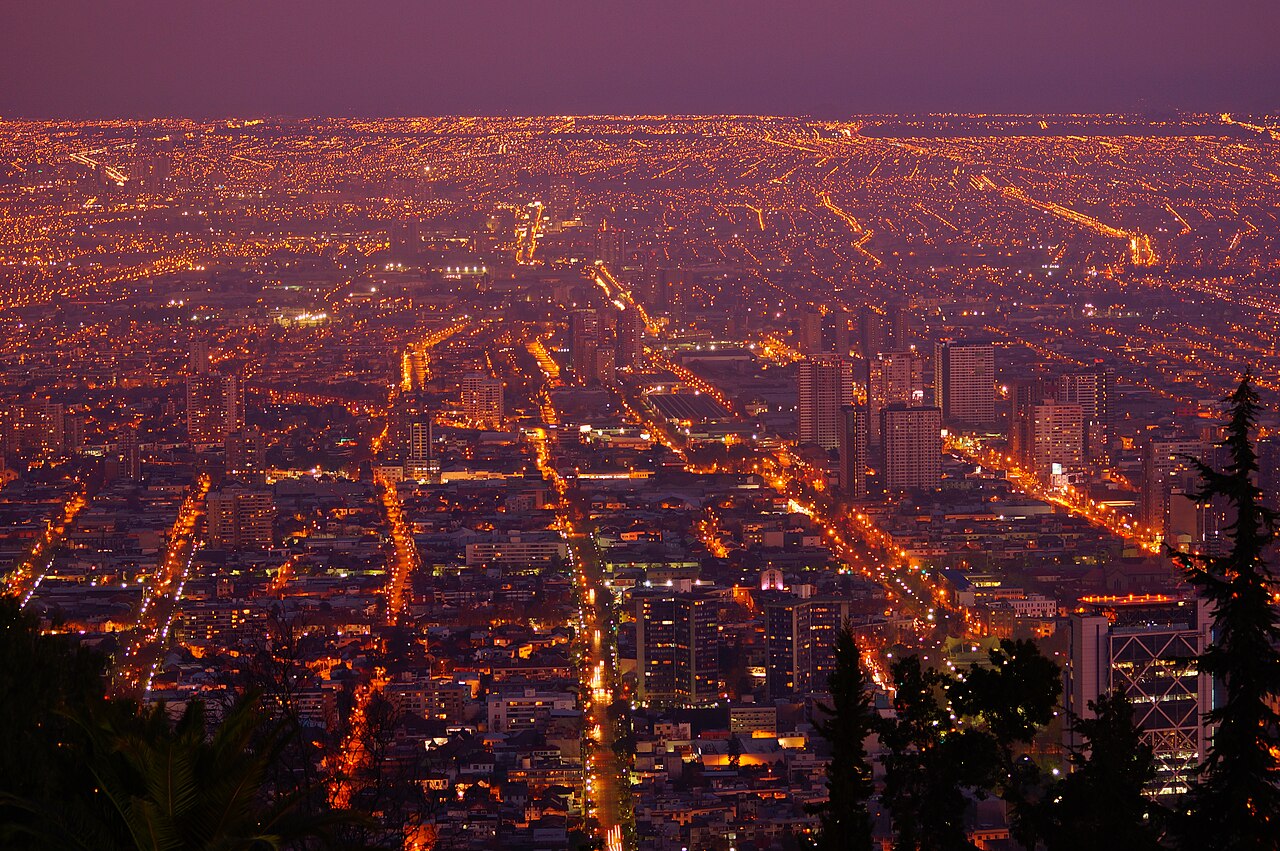
This archive view from San Cristóbal shows the extent of the city; plan your ascent around the funicular's operating hours, without relying on being there at dusk.
Photo: Cristian Quezada Valdés · CC BY 2.0 · 2013 · image resized.Photo source and license
Source: https://commons.wikimedia.org/wiki/File:Santiago_desde_el_Cerro_San_Cristobal.jpgLicense: https://creativecommons.org/licenses/by/2.0
Image processing: Miniatura de 1280 px do Wikimedia Commons; sem alteração de conteúdo.
Day 4: memory, a break and Chile's natural environments
Set aside Friday morning for the Museo de la Memoria y los Derechos Humanos, at Matucana 501. Documents and testimonies address human rights violations during the dictatorship from 1973 to 1990. This is a visit to approach thoughtfully, leaving time to read and process the material.
Admission is free. Outside summer, the municipal website lists opening hours from Tuesday to Sunday, from 10:00 to 18:00. After the visit, take a break to eat and rest before continuing to Parque Quinta Normal. Avoiding another commitment immediately afterwards helps protect this pause.
In the afternoon, you can stay in the park or visit the Museo Nacional de Historia Natural within it. The Chile Biogeográfico exhibition explores environments, biodiversity and connections with Indigenous peoples: a change of subject that broadens the trip beyond history and art. Admission is free, and the published closing time from Tuesday to Saturday is 17:30.
If you would prefer not to visit the Museo de la Memoria, visit Historia Natural in the morning and leave Quinta Normal for a more relaxed afternoon. This alternative keeps the day focused on the same area and offers a clear plan without requiring fresh research during the trip.
Day 5: Santa Lucía in the morning, design and antiques in the afternoon
Start Saturday at Cerro Santa Lucía. The municipal itinerary includes the hill among the cultural outings in the centre and recommends Santa Lucía station for access. We suggest setting aside the morning to walk and take in the hill's different spaces, without assuming you need to climb every staircase. Plaza Neptuno appears in the archive photograph accompanying this stop.
After a lunch break, head to Barrio Italia. Chile Travel recommends Santa Isabel station on Line 5 for access; from the Santa Lucía area, plan your metro journey with a connection to that line. A taxi is an alternative if you want to reduce the walking between the two parts of the day.
Devote the afternoon to the antique shops, design workshops and craft galleries that characterise the neighbourhood. Here, it is worth slowing down and stepping into whichever places are open, without making shopping an obligation. The aim is to discover another side of Santiago after the major museums and monuments.
If you want to avoid climbing the hill, replace the morning visit with GAM in Lastarria, checking the available programme and access arrangements. Keep Barrio Italia for the afternoon: this change preserves the variety of the final day and makes your farewell to the city less tiring.
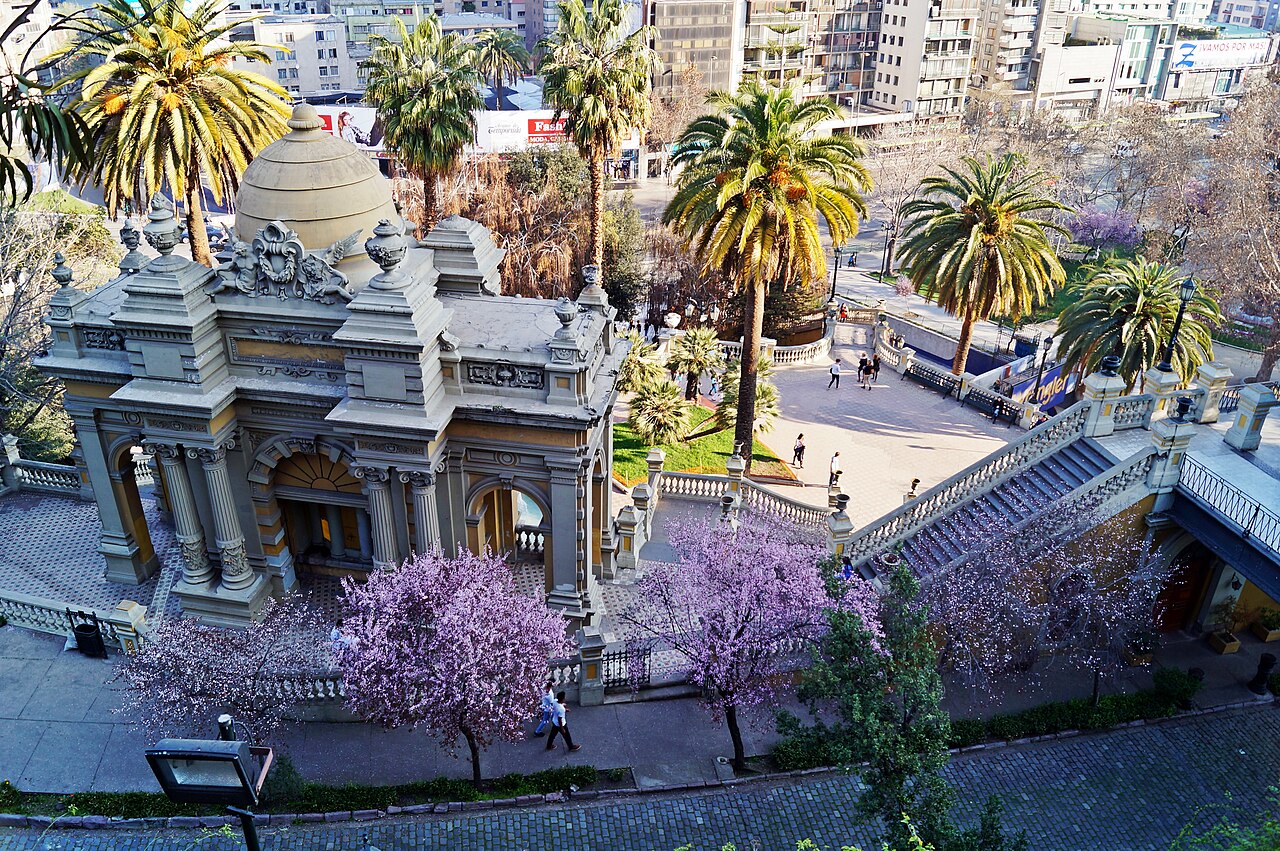
Plaza Neptuno appears in this archive photograph of Santa Lucía, the outing that opens the final day before Barrio Italia.
Photo: Nereidas · CC BY-SA 3.0 · 2012 · image resized.Photo source and license
Source: https://commons.wikimedia.org/wiki/File:Cerro_Santa_Luc%C3%ADa_-_Plaza_Neptuno.JPGLicense: https://creativecommons.org/licenses/by-sa/3.0
Image processing: Miniatura de 1280 px do Wikimedia Commons; sem alteração de conteúdo.
Adjust the dates and use the itinerary to prepare
Before finalising the order of the days, check opening hours for the week of your visit. Casa Colorada has different hours on Saturday, Liguria Lastarria closes on Sundays, and La Chascona admits individual visitors on a first-come, first-served basis. These details help you decide on changes without reworking the whole trip. The information for this article was checked on 29 October 2026.
The programme check found confirmed dates for the exhibition Te creo paisaje at Bellas Artes. However, the municipal calendar consulted did not provide enough detail to recommend specific scheduled tours. The itinerary therefore works through visits to the places presented here, with the possibility of adding an extra activity once it is confirmed for your dates.
Once you have chosen the sequence, use Mala Inteligente to build a checklist that accounts for walking, museums and the two hills. To organise your spending, the Viajandar calculator helps you create an estimate in Brazilian reais using editable amounts: enter costs you have researched and adjusted to your trip. It does not provide exchange rates or international price quotes, and its reference amounts do not represent prices in Chile.
Which option suits you?
| Option | A good fit if… | What to consider |
|---|---|---|
| Use Lastarria as your base | This suits travellers who want to stay close to part of the cultural itinerary and return to their accommodation to rest. | It makes the days around Bellas Artes, Parque Forestal and Santa Lucía easier, but still requires journeys to Bellavista, Quinta Normal and Barrio Italia. |
| Take an airport bus with a metro connection | This suits travellers who are comfortable changing vehicles on arrival and want to compare transport alternatives. | You need to check the boarding point and organise connections with your luggage. Red services also involve the connection between the terminals and Intermodal Aeropuerto. |
| Book an airport transfer | This suits travellers who prefer to simplify their arrival, especially when carrying luggage. | It reduces the number of stages you need to organise yourself; compare the type of service, the destinations served and the price before booking. |
| Take the funicular up Cerro San Cristóbal | This suits travellers who want to combine La Chascona and a viewpoint without walking all the way up. | It saves effort on the ascent, but depends on the day's operations and may involve a wait. |
| Spend the afternoon only in Parque Quinta Normal | This suits travellers who want an afternoon with fewer indoor visits after the Museo de la Memoria. | It leaves more room for rest; the Museo Nacional de Historia Natural remains a specific alternative for anyone who wants to continue. |
Your itinerary, ready to save
Day 1 — Tuesday: historic centre
Start at Plaza de Armas and visit Casa Colorada, at Merced 860. Take a lunch break before continuing to the Museo Chileno de Arte Precolombino, at Bandera 361. Set aside the afternoon for the galleries and leave the evening free.
Prefer an alternative? To reduce the number of museum visits, explore Plaza de Armas and Casa Colorada in the morning, enjoy a leisurely lunch and return to your accommodation; leave the Precolombino out of this version of the day.Day 2 — Wednesday: Bellas Artes and Lastarria
Devote the morning to the Museo Nacional de Bellas Artes. Walk through Parque Forestal and head to Liguria Lastarria, at Merced 298, for lunch. In the afternoon, visit Plaza Mulato Gil de Castro and stroll through the neighbourhood's streets, returning early to your accommodation.
Prefer an alternative? If you would prefer to focus the day on art, replace the longer walk through Lastarria with the Museo de Arte Contemporáneo, checking the opening arrangements for its Parque Forestal location beforehand.Day 3 — Thursday: Bellavista and San Cristóbal
Visit La Chascona in the morning, allowing time for first-come, first-served admission. Take a lunch break before riding up on the Pío Nono funicular. At the top, combine the viewpoints with coffee and a snack at Café Tudor, if it is serving.
Prefer an alternative? If the funicular is not running, head to GAM in Lastarria after La Chascona for a cultural afternoon, depending on the day's programme and access arrangements.Day 4 — Friday: Memoria and Quinta Normal
Set aside the morning for the Museo de la Memoria y los Derechos Humanos, at Matucana 501. Take a break to eat and rest before visiting Parque Quinta Normal. Visit the Museo Nacional de Historia Natural in the afternoon if you want to continue exploring cultural attractions.
Prefer an alternative? If you would prefer a different theme for the morning, visit the Museo Nacional de Historia Natural and spend the afternoon in Parque Quinta Normal, replacing the visit to the Museo de la Memoria.Day 5 — Saturday: Santa Lucía and Barrio Italia
Start at Cerro Santa Lucía, without feeling obliged to climb every staircase. After a lunch break, take the metro, changing to Line 5 for Santa Isabel, and walk through Barrio Italia, devoting the afternoon to antiques, design and crafts.
Prefer an alternative? To avoid climbing Santa Lucía, spend the morning at GAM, depending on the available access and programme, and keep Barrio Italia for the afternoon.Before you go
- Allow five full days for sightseeing and set aside separate time for arrival and departure. The suggested sequence runs from Tuesday to Saturday.
- Check opening hours again before travelling: the pages were consulted on 29 October 2026.
- Casa Colorada lists opening hours from Tuesday to Friday, from 10:00 to 18:00, and on Saturday, from 10:00 to 16:00. The Precolombino lists opening hours from Tuesday to Sunday, from 10:00 to 18:00, with last admission at 17:15.
- Bellas Artes lists opening hours from Tuesday to Sunday, from 10:00 to 18:30. For Te creo paisaje, check whether your trip falls between 8 October 2026 and 28 February 2027.
- La Chascona lists opening hours from Tuesday to Sunday, from 10:00 to 18:00; individual admission is on a first-come, first-served basis. Also check that the funicular is running before setting out.
- The Museo de la Memoria lists opening hours outside summer from 10:00 to 18:00, Tuesday to Sunday. Historia Natural lists opening hours from Tuesday to Saturday, from 10:00 to 17:30, and on Sunday, from 11:00 to 17:30.
- Confirm that Liguria Lastarria will be serving the meal you have planned. The restaurant states that it is closed on Sundays; Café Tudor does not list its own opening hours on the page consulted.
- On arrival, check the boarding point for your chosen bus, the connections and metro operating hours. For Red services, factor in the changes between the terminal, shuttle bus and Intermodal Aeropuerto.
- Turn your walking days and museum visits into a checklist with Mala Inteligente. In the calculator, use amounts in Brazilian reais that you enter or adjust yourself, without treating reference figures as prices in Chile.
Questions to help you decide
Do the five days include flights?
This itinerary uses five full days for sightseeing, with arrival and departure excluded from the count. It focuses on exploring the capital with variety and breaks, without including other regions of Chile.
Do I need to hire a car to follow the itinerary?
You can organise this itinerary using the metro and walking. The funicular helps with the ascent of San Cristóbal, and a transfer can simplify your arrival. The airport requires a surface transport connection: the options researched do not include a metro station directly at the terminals.
Where does it make sense to look for accommodation?
Lastarria is the suggested base because it is close to Bellas Artes, Parque Forestal and some of the central sights. Compare your accommodation's location with Universidad Católica station on Line 1 and Bellas Artes station on Line 5. The research does not include assessments of individual hotels.
Can I start on another day of the week?
The proposed sequence runs from Tuesday to Saturday. For other dates, rearrange visits around opening days: Casa Colorada lists opening from Tuesday to Saturday, while several of the other museums researched welcome visitors from Tuesday to Sunday. Liguria Lastarria states that it is closed on Sundays.
Do I need to book La Chascona?
The Pablo Neruda Foundation states that individual admission to La Chascona is on a first-come, first-served basis, without reservations. A Portuguese audio guide is available. Allow time for a possible wait before continuing to the funicular.
Are there any exhibitions with confirmed dates?
The official Bellas Artes programme confirms Enrique Ramírez. Te creo paisaje from 8 October 2026 to 28 February 2027. For trips within that period, it fits into the second day alongside the museum's collection.
Ready to start planning?
Mala Inteligente: turn your five days of sightseeing into a checklist ↗Cost calculator: organise an estimate in Brazilian reais using amounts you adjust yourself ↗A preview of your next trip
See the destination on video, then return to the itinerary to plan your trip at your own pace. Video in Portuguese.
Sources and editorial review
This is a researched guide, not a personal account of a visit. The itinerary suggestions are editorial recommendations. Confirm opening arrangements, prices and conditions close to your trip.
- Chile Travel — Barrio Lastarria and Bellas Artes · checked 2026-10-29
- Santiago Turismo — Airport transport · checked 2026-10-29
- Red Movilidad — Airport connections in 2026 · checked 2026-10-29
- Red Movilidad — Connection between the intermodal station and the terminals · checked 2026-10-29
- Municipalidad de Santiago — Museo Casa Colorada · checked 2026-10-29
- Museo Chileno de Arte Precolombino — Visiting · checked 2026-10-29
- Museo Nacional de Bellas Artes — Visiting and collection · checked 2026-10-29
- MNBA — Confirmed dates for Te creo paisaje · checked 2026-10-29
- Santiago Turismo — Santa Lucía, Forestal and Lastarria · checked 2026-10-29
- Fundación Pablo Neruda — Visitor information · checked 2026-10-29
- Registro de Museos de Chile — Casa Museo La Chascona · checked 2026-10-29
- Funicular Santiago — Access to Cerro San Cristóbal · checked 2026-10-29
- Chile Travel — Cerro San Cristóbal · checked 2026-10-29
- Funicular Santiago — Café Tudor · checked 2026-10-29
- Liguria — Restaurant and Lastarria branch · checked 2026-10-29
- Santiago Turismo — Museo de la Memoria y los Derechos Humanos · checked 2026-10-29
- Santiago Turismo — Museo Nacional de Historia Natural · checked 2026-10-29
- Chile Travel — Barrio Italia and Bellavista · checked 2026-10-29
- Santiago Turismo — Subdirección de Turismo programme · checked 2026-10-29