South Korea · Gyeongju, South Korea, with an outing to Yangdong village
Four days in Gyeongju: Silla, temples and Yangdong at leisure
Four full days in Gyeongju with Silla tombs, the National Museum, Bulguksa, Seokguram, Korean food, waterside evenings and Yangdong village.
GETTING STARTED
Two days for the historic centre and its food breaks, one for Bulguksa and Seokguram and another for Yangdong. The itinerary keeps dusk for Donggung/Wolji, connects it with the National Museum visit and excludes arrival and departure from the four sightseeing days.
Who it is for: Brazilian travellers wanting history, Korean food and walks with breaks during four full days in Gyeongju as part of a longer South Korean trip.Four days with room to look, eat and rest
You can spend four days in Gyeongju alternating Silla tombs, objects of court life, Buddhist temples and streets of an inhabited village, with room to sit, eat and walk again. We suggest two days in the centre, one for Bulguksa and Seokguram and another for Yangdong. The more distant outings then do not compete with dusk visits.
These are four full visiting days, excluding arrival and departure. This is one part of a longer South Korean trip: the city lists railway connections with Seoul, Dongdaegu and Busan, plus road connections. Choose services around your trip sequence and allow time to reach accommodation too.
The order has a small advantage: first see Donggung and Wolji Pond, then encounter recovered objects in the museum the next morning. Later, Yangdong shifts the historical conversation from Silla to Joseon’s Confucian culture.
A central base and arranged transport for outings
For accommodation, begin around Hwangnam-dong and Hwangnidan-gil in the Poseok-ro area. Proximity to Daereungwon and Cheomseongdae favours the first two days, and the street offers restaurants, cafés and shops. This suggestion follows the itinerary map, without promising quietness or recommending a particular property.
Daereungwon, Cheomseongdae and Donggung/Wolji allow stretches on foot. Bulguksa, Seokguram and Yangdong require transport. If comfort matters, consider taxis for external outings and clearly agree meeting points and return travel.
Sources mention route 12 between Bulguksa and Seokguram and 203 to Yangdong but cannot guarantee current times. For the village, the municipal reference is archived and warns of long intervals. Resolve logistics before leaving so the outing does not depend on searching for a return.
Day 1: Silla tombs, red-bean sweets and Hwangnidan-gil
Begin day one at Daereungwon, the tomb complex of Silla rulers and aristocrats. Include Cheonmachong, whose interior can be visited: it adds another perspective to walking among mounds and avoids reducing the visit to a series of exterior views.
We then suggest Hwangnam Bread’s main shop, 783 Taejong-ro. The brand, founded in 1939, is associated with red-bean sweet bread. It is a locally distinctive break before Hwangnidan-gil; check service on the establishment’s website without relying on a particular batch or sales format.
In Hwangnidan-gil, walk through the Poseok-ro area, observing the mix of hanoks and 1960s–1970s buildings housing cafés, restaurants and shops. Use this stretch for lunch and a sit-down. Choose the restaurant during the outing, since each address has its own hours; the afternoon still holds Cheomseongdae and Wolji.
Cheomseongdae before the light changes
After the break, head to Cheomseongdae. The stone observatory is associated with Seondeok’s seventh-century reign. Pause to observe the curved tower body and small opening: a very different presence from the morning’s tombs, though part of Silla’s same historical world.
We suggest this stage in daylight, continuing afterwards to Donggung/Wolji. The combination uses central proximity and leaves dusk for a place where water contributes to the landscape. There is no need to spend the whole interval walking; the earlier Hwangnidan-gil break is part of the proposed rhythm.
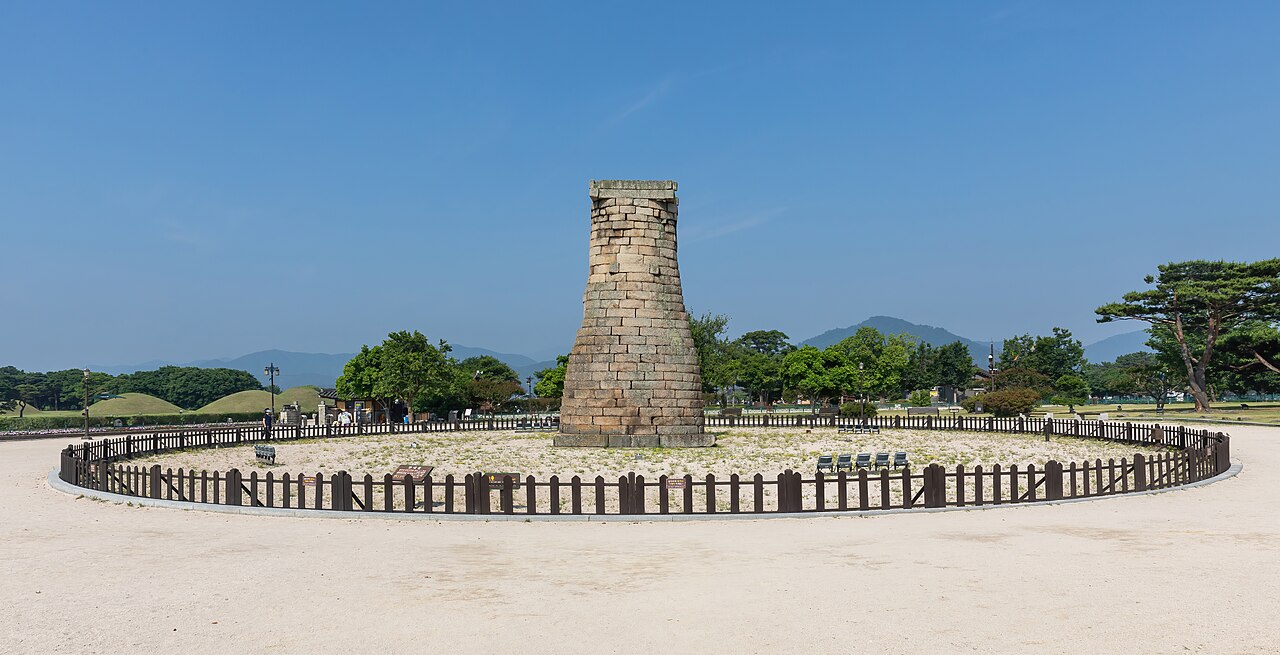
Cheomseongdae joins the afternoon walk between the Hwangnidan-gil break and Donggung/Wolji.
Photo: Basile Morin · CC BY-SA 4.0 · 2024 · image resized.
Donggung and Wolji: an evening beside the water
End day one at Donggung and artificial Wolji Pond. The complex served Silla’s court, including banquets and gatherings. Walking beside the water reveals a place connected to palace life after a morning devoted to tombs.
The reason for saving dusk is the illuminated pavilions and lake reflections. Check current visiting hours for your date, since a tourism description cannot guarantee present night opening. For an earlier finish, a daylight visit also fits.
Remember Wolji’s name for the next morning: its National Museum gallery brings together finds that help imagine uses of these spaces. The link continues the outing without requiring you to absorb all the history in one visit.
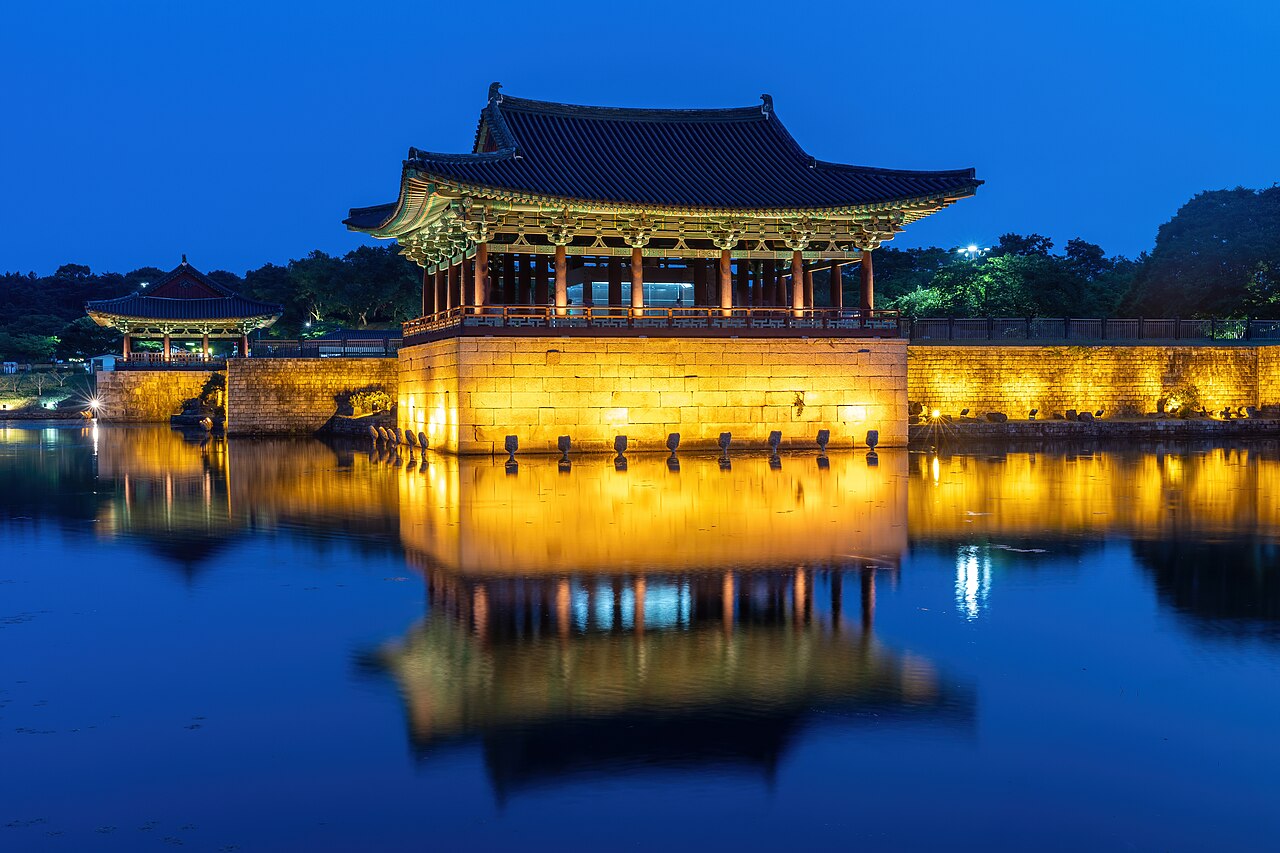
Wolji’s reflections give a reason to keep the end of day one for Donggung.
Photo: Basile Morin · CC BY-SA 4.0 · 2024 · image resized.
Day 2: objects that complete Silla’s landscape
Begin day two at Gyeongju National Museum, 186 Iljeong-ro. We suggest focusing the morning on Silla History and Wolji galleries. In the latter, utensils from the palace complex bring history closer to everyday court life and give another meaning to the previous evening’s pavilions.
Include King Seongdeok’s bell outdoors. To extend the visit if time allows before lunch, add Silla Art gallery. Choosing priorities allows careful looking without making every room compulsory.
Permanent exhibitions have free entry according to official information; special exhibitions may have different conditions. Check calendars and notices before setting the day. The museum is also the best element to swap with Daereungwon or Yangdong if the forecast calls for more indoor time.
Gyochon between Yosukgung’s table and Woljeonggyo bridge
To give food a prominent place, we suggest reserving lunch at Yosukgung 1779 in Gyochon. The restaurant presents seasonal cooking based on Choi-family recipes, regional ingredients and fermentation. Arrange museum departure around the booking; menus, prices and availability need direct checks.
After lunch, walk around Gyochon and save a second break for Café EYST 1779 in Gyo-dong. Its architecture combines red brick with a traditional hanok roof. The café page presents milk and red-bean desserts plus monaka with ice cream; choose among products available on arrival.
Then head to Woljeonggyo and observe the bridge from the banks too. The present structure is a reconstruction completed in 2018, based on research into the Silla bridge. Knowing this allows appreciation without mistaking it for eighth-century preserved wood. The official listing states free visits.
Without a Yosukgung reservation, an alternative is Hwangnidan-gil lunch while retaining Gyochon, the café and bridge in the afternoon. You preserve the outing, though lose the meal’s specific Choi-family approach.
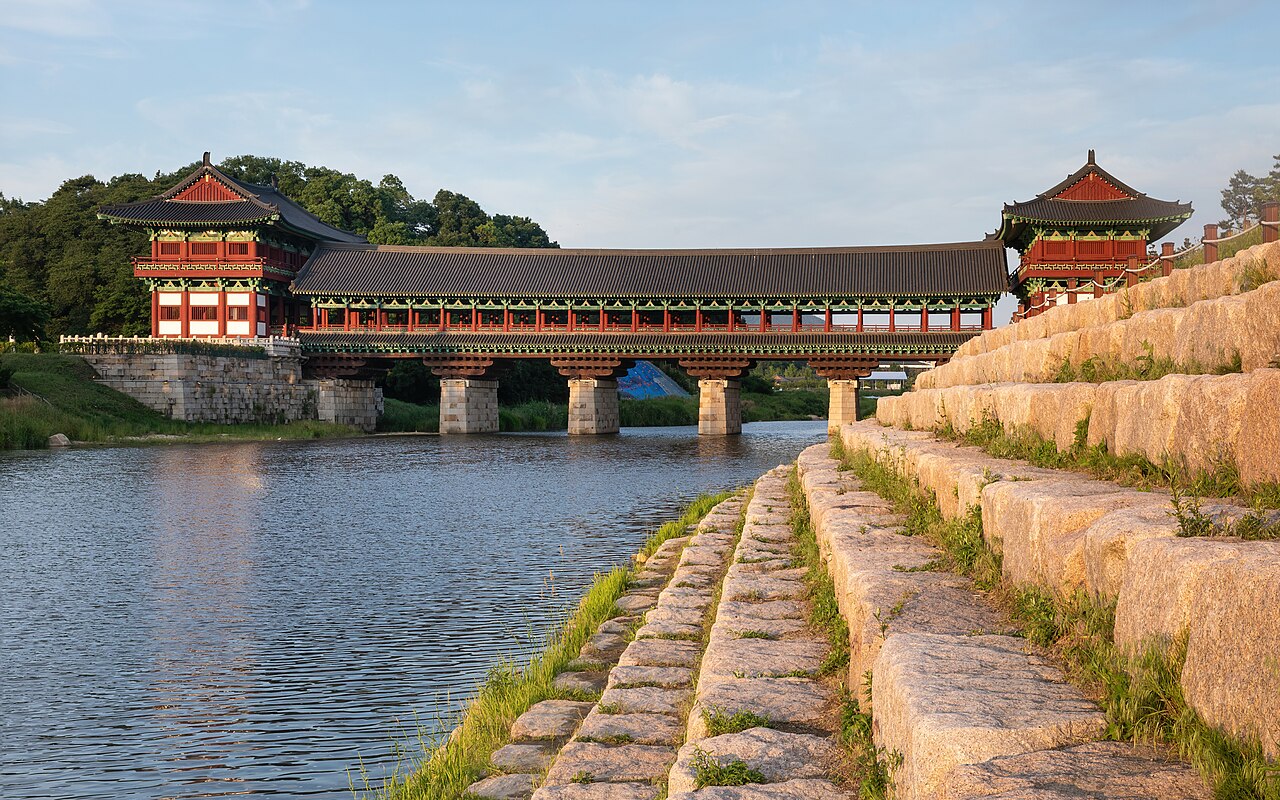
After Gyochon, observe Woljeonggyo from the bank too: the view conveys the bridge’s length.
Photo: Basile Morin · CC BY-SA 4.0 · 2024 · image resized.
Day 3: Bulguksa and Seokguram with time between visits
Keep day three for Bulguksa and Seokguram. Begin at Bulguksa, paying attention to terraces, Daeungjeon hall and Seokgatap and Dabotap pagodas. Making both pagodas central helps reveal forms and details instead of simply crossing the complex.
After a break, continue to Seokguram, an artificial Silla-period grotto with a circular chamber and Buddha sculpture. This adds another Buddhist-art experience but involves travel and an access walk. Confirm transport connections before the trip; mentioning route 12 does not guarantee current service.
For more comfort, consider arranging transport for both visits and the return. Another valid choice is Bulguksa alone, exploring its elements longer and removing Seokguram. Yangdong stays on the following day: adding it here would reduce the very breaks that make this itinerary pleasant.
Back in the centre, Hwangnidan-gil is the suggested area to eat and finish the day. No restaurant beside the temples was verified in this selection, so arrange water and a snack before departure without depending on a specific address for the break.
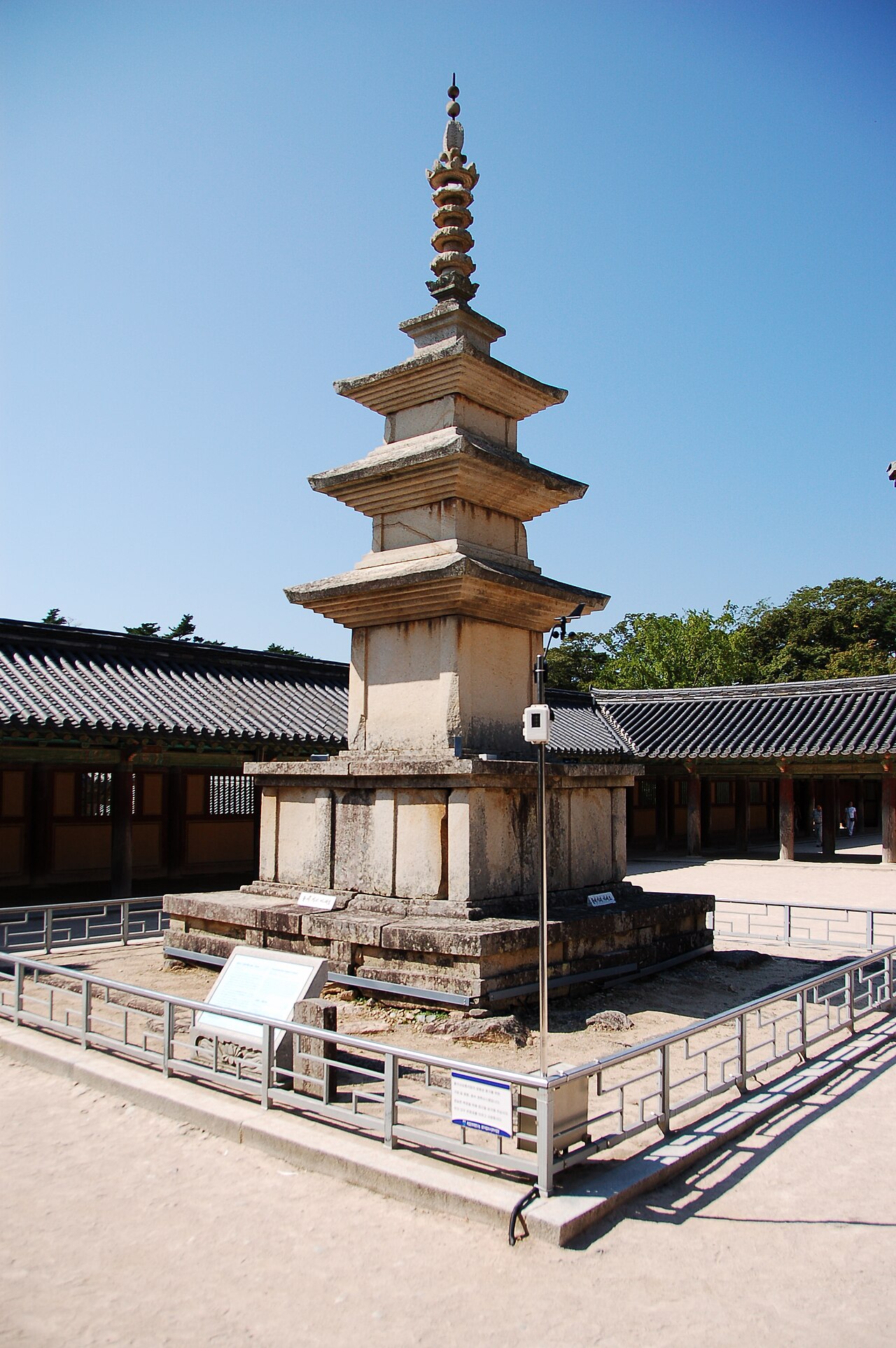
Seokgatap is a central stop at Bulguksa; this archive image does not show current conditions around it.
Photo: rinux · CC BY-SA 2.0 · 2006 · image resized.
Day 4: Yangdong and another chapter of Korean history
Yangdong deserves day four because it changes the trip’s focus. After three days centred on Silla, you encounter a village whose organisation expresses Joseon-period Confucian culture. Family residences, pavilions and study spaces sit within an agricultural landscape, as UNESCO describes.
The village preserves traditional houses and residents descended from local families. Along the walk, use Hyangdan, Seobaekdang, Mucheomdang and Gwangajeong as architectural references. Follow permitted routes and access signs: naming the houses does not mean their interiors are open.
Leave Gyeongju with return travel arranged. The archived municipal page mentions route 203 and long intervals, but current times were not confirmed in the evidence. Arranged outward and return transport can add comfort; make the village the day’s only distant outing.
On return, we suggest eating in Hwangnidan-gil and a final short walk there. To replace residential heritage with waterside scenery, substitute a stretch of Bomun Lake’s shore for Yangdong. This changes the historical content while retaining a relaxed pace.
Two dated alternatives in October 2026
The municipal programme was consulted on 10/10/2026. For travellers in the corresponding period, EX Pumpkin Night is confirmed for 24/09–24/10/2026 in Gyeongju Expo Grand Park’s Hwarang forest, with a themed night walk. It offers variety from heritage evenings.
We suggest using it instead of the Donggung/Wolji evening and visiting the palace complex in daylight. Since it adds another journey, allow a break before leaving and check visiting conditions through the official link. Do not count on the programme outside the stated dates.
On 31/10/2026, the programme confirms Bomun Night Run with Wally, with 5 and 10 km options. It makes sense only for visitors who want to include running in their trip; event confirmation does not guarantee that registration is still available. In that case, combine it with visiting Bomun instead of Yangdong, rather than fitting both outings into the same day.
The few decisions worth settling before travel
Before fixing the order, settle three things: National Museum calendar, Yosukgung 1779 booking and transport to Bulguksa/Seokguram and Yangdong. These most influence the sequence. Central walks and Hwangnidan-gil breaks can fit around them.
Then open Mala Inteligente through related links and turn the itinerary into a checklist. For walks and Seokguram access, a practical suggestion is comfortable shoes, water and items suited to your trip’s weather forecast.
To organise spending, use your own editable figures in reais for accommodation, food and journeys. The calculator serves as an illustrative estimate here: it provides neither exchange rates nor international quotations, and reference figures should not be treated as South Korean prices.
Which option suits you?
| Option | A good fit if… | What to consider |
|---|---|---|
| Daereungwon, Hwangnidan-gil, Cheomseongdae and Donggung/Wolji on day one | For those wanting to begin with Silla landscapes and walk between central attractions. | The outing extends to dusk; a long break between the tombs and afternoon walk is worthwhile. |
| National Museum, reserved Yosukgung 1779 lunch, Gyochon and Woljeonggyo | For those who enjoy understanding historic objects and giving food its own time. | The restaurant reservation organises the schedule; leave a margin between museum and lunch. |
| Bulguksa and Seokguram in one day | For those wanting two important ensembles of Silla Buddhist art. | There is transport between sites and an access walk; arranging a taxi may add comfort but requires arranging the return too. |
| A day devoted to Yangdong | For those wanting residential architecture and Joseon-period history. | The village is outside the central circuit. Outward and return journeys must be settled before departure. |
| Replace Yangdong with a stretch of the Bomun Lake walk | For those preferring waterside walks and fewer historical visits. | You give up the village and its contrast with Silla. There is no need to complete the approximately 7 km around the lake. |
Your itinerary, ready to save
Day 1 — morning and a food break
Begin at Daereungwon and include Cheonmachong to see inside a tomb. Then pause at Hwangnam Bread’s main shop, 783 Taejong-ro, and continue to Hwangnidan-gil, where we suggest lunch and a rest before walking again.
Prefer an alternative? In rain, bring forward the National Museum’s Silla History and Wolji galleries and move Daereungwon to the morning originally kept for the museum.Day 1 — afternoon and dusk
After the break, walk to Cheomseongdae to observe the seventh-century stone tower. Finish at Donggung and Wolji Pond, leaving time for changing light and pavilion reflections according to current visiting hours.
Prefer an alternative? For a shorter evening, visit Donggung/Wolji in daylight; pavilions and pond remain the focus, although you give up reflected illumination.Day 2 — morning
Visit Gyeongju National Museum, beginning with Silla History and Wolji galleries. Objects found in the palace complex help interpret the previous evening’s outing. Reserve time for King Seongdeok’s bell too.
Prefer an alternative? If Wolji gallery is unavailable, combine Silla History with Silla Art and retain the outdoor King Seongdeok bell visit.Day 2 — lunch, afternoon and end of day
With a reservation, lunch at Yosukgung 1779 in Gyochon to explore its seasonal cooking linked to the Choi family. Walk around the neighbourhood, pause at Café EYST 1779 and finish beside Woljeonggyo, observing the structure from the riverbanks too.
Prefer an alternative? If Yosukgung 1779 lunch is unavailable, return to Hwangnidan-gil to eat and continue afterwards to Gyochon, Café EYST 1779 and Woljeonggyo.Day 3 — Bulguksa and Seokguram
Leave the centre to visit Bulguksa first, paying attention to Seokgatap and Dabotap pagodas. After a break, continue to Seokguram, allowing a margin for transport and the access walk. Return without adding another distant outing; Hwangnidan-gil is the suggested area for a meal afterwards.
Prefer an alternative? For just one visit that day, stay longer at Bulguksa among terraces, Daeungjeon hall and both pagodas, removing Seokguram.Day 4 — Yangdong and a relaxed return
Devote the day to Yangdong with outward and return travel arranged. Use Hyangdan, Seobaekdang, Mucheomdang and Gwangajeong as references along permitted street routes without assuming house access. On returning, finish in Hwangnidan-gil for food and rest.
Prefer an alternative? To replace the village with a waterside walk, visit Bomun Lake and cover only part of the shore. If rain is the problem, swap Yangdong with National Museum day according to the visiting calendar.Before you go
- Separate arrival and departure from the four sightseeing days and check train or bus service before finalising other trip stages.
- Check the accommodation’s exact address relative to Daereungwon and Hwangnidan-gil; Hwangnam-dong is a geographical suggestion, not a hotel assessment.
- Consult the National Museum calendar and notices. The proposal uses daytime visits and does not depend on extended evening opening.
- Check current Donggung/Wolji hours to fit dusk on your date.
- Book Yosukgung 1779 before organising day two’s lunch and check Hwangnam Bread and Café EYST 1779 service.
- Confirm transport between Bulguksa and Seokguram. Reference to route 12 does not establish current operation or times.
- Arrange the Yangdong return before leaving. Route 203 appears on an archived municipal page without validation of current times.
- In Yangdong follow local circulation and access signs; named houses do not imply open interiors.
- For EX Pumpkin Night or Bomun Night Run with Wally, check participation conditions in the official October 2026 programme.
- Use Mala Inteligente to turn walks and outings into a checklist. In the calculator, build only an estimate in reais using your own editable figures.
Questions to help you decide
Do the four days include arrival in Gyeongju?
Not in this itinerary. They are four full sightseeing days, excluding arrival and departure, within a longer South Korean trip. If travel takes one of those mornings, visits must be removed or rearranged.
Can I do the whole itinerary on foot?
Routes between Daereungwon, Cheomseongdae and Donggung/Wolji can be walked. Bulguksa, Seokguram and Yangdong require transport. For these outings, bus operation and times need checking; taxis can make visits easier to combine.
Is it worth combining Yangdong, Bulguksa and Seokguram?
We suggest keeping Yangdong on another day. Bulguksa and Seokguram already involve two visits, travel and an access walk. Separating the village allows observation of streets and houses without turning the day into constant boarding.
Where should I begin looking for accommodation?
First look around Hwangnam-dong and Hwangnidan-gil if your priority is walking through the historic centre with restaurants and cafés nearby. This is a location-based suggestion; check the accommodation address on a map and each property’s conditions.
Which outing works as a rainy-day alternative?
Gyeongju National Museum is the strongest alternative: begin with Silla History and Wolji galleries. Swap its date with Daereungwon or Yangdong, preserving a better-weather day for outdoor routes.
Do I need to reserve any meals?
Yosukgung 1779 states service by reservation. We suggest booking day two’s lunch and organising the museum around it. Hwangnam Bread and Café EYST 1779 are breaks whose service and products need confirmation for your visit.
Is there an October 2026 programme that fits the itinerary?
The programme consulted confirms EX Pumpkin Night on 24/09–24/10/2026 and Bomun Night Run with Wally on 31/10/2026. Include them only if they coincide with your trip; check programming, access and, for the run, registration through the official link.
Ready to start planning?
Mala Inteligente: turn four days of walks and visits into a checklist ↗Cost calculator: organise an estimate in reais using your own figures ↗A preview of your next trip
See the destination on video, then return to the itinerary to plan your trip at your own pace. Video in Portuguese.
Sources and editorial review
This is a researched guide, not a personal account of a visit. The itinerary suggestions are editorial recommendations. Confirm opening arrangements, prices and conditions close to your trip.
- Korea Tourism Organization — Gyeongju: Heart of Ancient Korea · checked 2026-10-10
- City of Gyeongju — getting there · checked 2026-10-10
- Gyeongju Tourism — northern city and Yangdong outing · checked 2026-10-10
- Korea Heritage Agency — Cheomseongdae, Bulguksa and Seokguram · checked 2026-10-10
- Korea Tourism Organization — Hwangnidan Street · checked 2026-10-10
- Gyeongju National Museum — galleries and facilities · checked 2026-10-10
- Gyeongju National Museum — visitor information · checked 2026-10-10
- Korea Tourism Organization — Donggung Palace and Wolji Pond · checked 2026-10-10
- Korea Tourism Organization — Woljeonggyo bridge · checked 2026-10-10
- Hwangnam Bread — official website · checked 2026-10-10
- Yosukgung 1779 — seasonal cooking and reservations · checked 2026-10-10
- Café EYST 1779 — official website · checked 2026-10-10
- Gyeongju Tourism — outings and official October 2026 programme · checked 2026-10-10
- UNESCO — Historic Villages of Korea: Hahoe and Yangdong · checked 2026-10-10