Ireland · Dublin (Baile Átha Cliath), Ireland, with a trip to Howth
Dublin in six days: literature, gardens, music and a trip to Howth
Spend six full days in Dublin and Howth, with Trinity, literature, museums, gardens, traditional music, food stops and a practical base for car-free travel.
GETTING STARTED
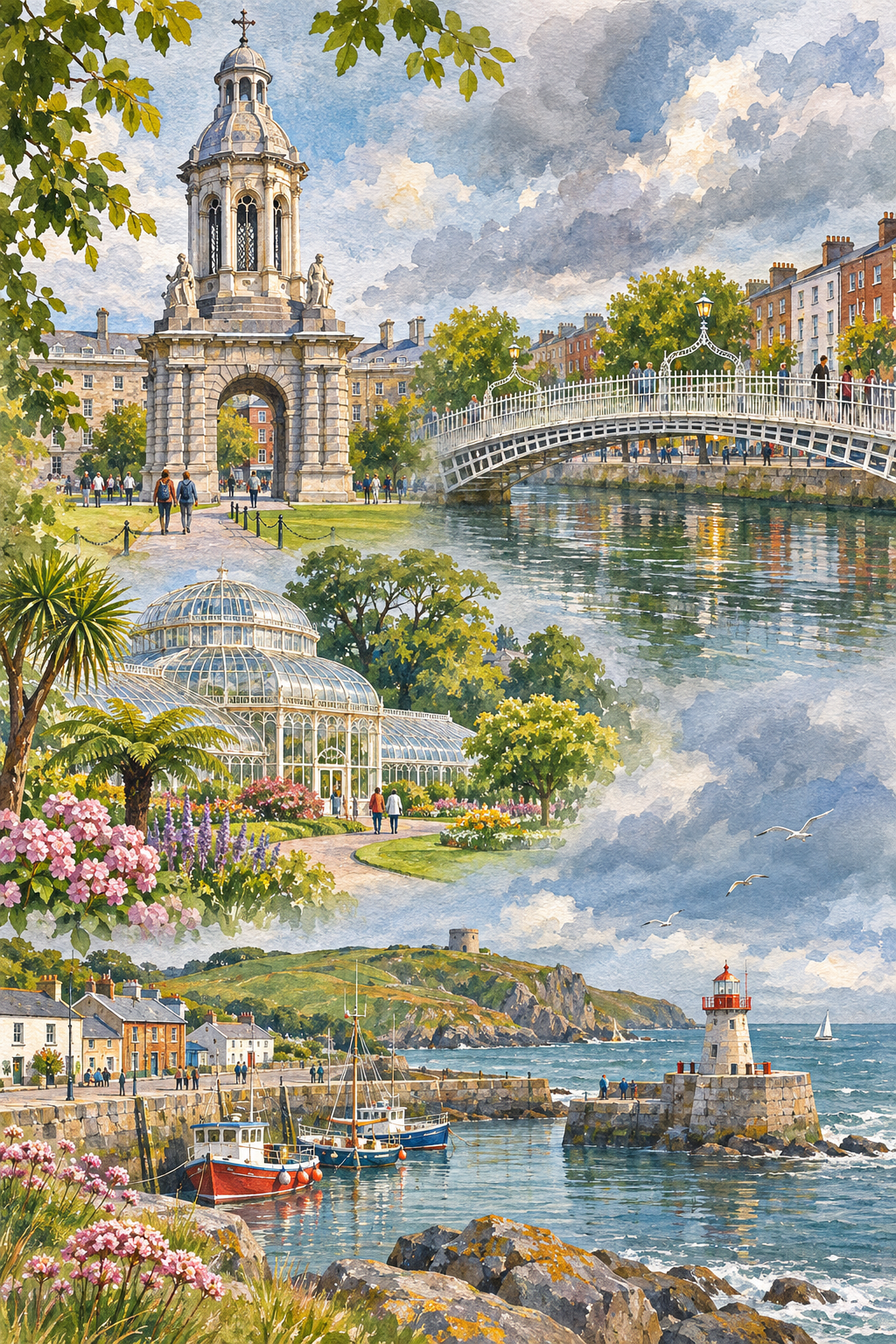
Spend six full days exploring literary Dublin, the city centre’s museums, Kilmainham, the gardens of Glasnevin and Howth harbour. The itinerary groups sights by area and includes four food stops backed by verified sources, plus an evening of traditional music, using walking and public transport to get around. Arrival and departure days are not included.
Who it is for: Brazilians visiting Dublin for the first time who want six full days of culture, gardens, music and food, using public transport and taking comfortable breaks.Six days to discover different sides of Dublin
Six days in Dublin can take you through quite different settings: you can begin among books at Trinity, discover Irish painting at the National Gallery, wander through gardens in Glasnevin and end an afternoon looking out over Howth harbour. Our suggested itinerary groups sights by area and includes food stops along four of those routes, without relying on a car.
These are six full days, excluding arrival and departure. This is a Dublin itinerary with a day in Howth, not a tour of the whole of Ireland. The days follow a suggested order, but you can rearrange them: your Kilmainham Gaol ticket, museum closures and conditions for the coastal outing should guide that decision.
The outline is as follows: two days in the centre for literature, archaeology and painting; one in Kilmainham; another in Glasnevin; one by the sea; and the last exploring the medieval city, the Liffey and traditional music. You alternate more in-depth visits with gardens and walks, rather than going from one museum straight to the next.
A base that works with your sightseeing plans
For this itinerary, our first suggestion is to look for accommodation around St Stephen’s Green and Grafton Street. The location works particularly well for Trinity and MoLI on the first day and the group of museums on the second. The official Visit Dublin guide lists mid-range and higher-end accommodation in this area; staying there does not, in itself, guarantee quiet surroundings or a particular standard of room.
Gardiner Street, near Connolly, is worth including in your comparison if rail access matters more to you. The Liberties also appears in the official guide as an alternative area to stay. Compare each property’s exact address with the six-day itinerary: your choice should make getting around easier, rather than relying solely on the neighbourhood’s name.
For your arrival, the Dublin Airport website lists city bus routes 16, 19, 24 and 41 among the options for Dublin. Choose the service and stop that suit your accommodation, checking the current route. The Leap Visitor Card covers participating bus, Luas, DART and commuter rail services; do not assume that every private express bus is included.
On the days in the centre, combine sights on foot at your own pace. For Kilmainham and Glasnevin, check buses and Luas services in the TFI journey planner; for Howth, plan your DART journey. Visit Dublin recommends TFI as a tool for checking the locations and timetables of these transport services. If a stretch becomes tiring, an occasional taxi can add comfort without reorganising the whole trip around a car.
Day 1: from Trinity to the voices of MoLI
Start at Trinity with a reserved time slot for the Book of Kells Experience. The experience brings together the manuscript, the Long Room and a digital exhibition; the venue recommends allowing approximately 90 minutes. There is an important difference from the best-known images of the library: the official website states that the books have been removed for conservation, except for the first four sets of shelves at the entrance.
Then follow Grafton Street to St Stephen’s Green. The park is free to enter and has Victorian paths, an ornamental lake and sculptures, including a James Joyce memorial. We suggest taking a break beside the lake before continuing to MoLI: the garden offers a pause in the sightseeing while keeping the day’s literary thread.
The Museum of Literature Ireland occupies a Georgian house at 86 St Stephen’s Green. Sound installations, Riverrun of Language, A City of Words and the first copy of Ulysses offer different ways to explore Irish literature. Allow one to two hours, following the museum’s estimate, for the self-guided visit, without trying to fit in another major attraction immediately afterwards.
Take a food break at the Commons Café as part of your visit to MoLI. The museum’s current website describes seasonal food and coffee, managed by Gather + Gather: it is a practical way to eat and continue your visit at the same address, without promising a particular dish. If the house interests you more than the literary installations, check the Historic House Tour session and plan your afternoon around it.
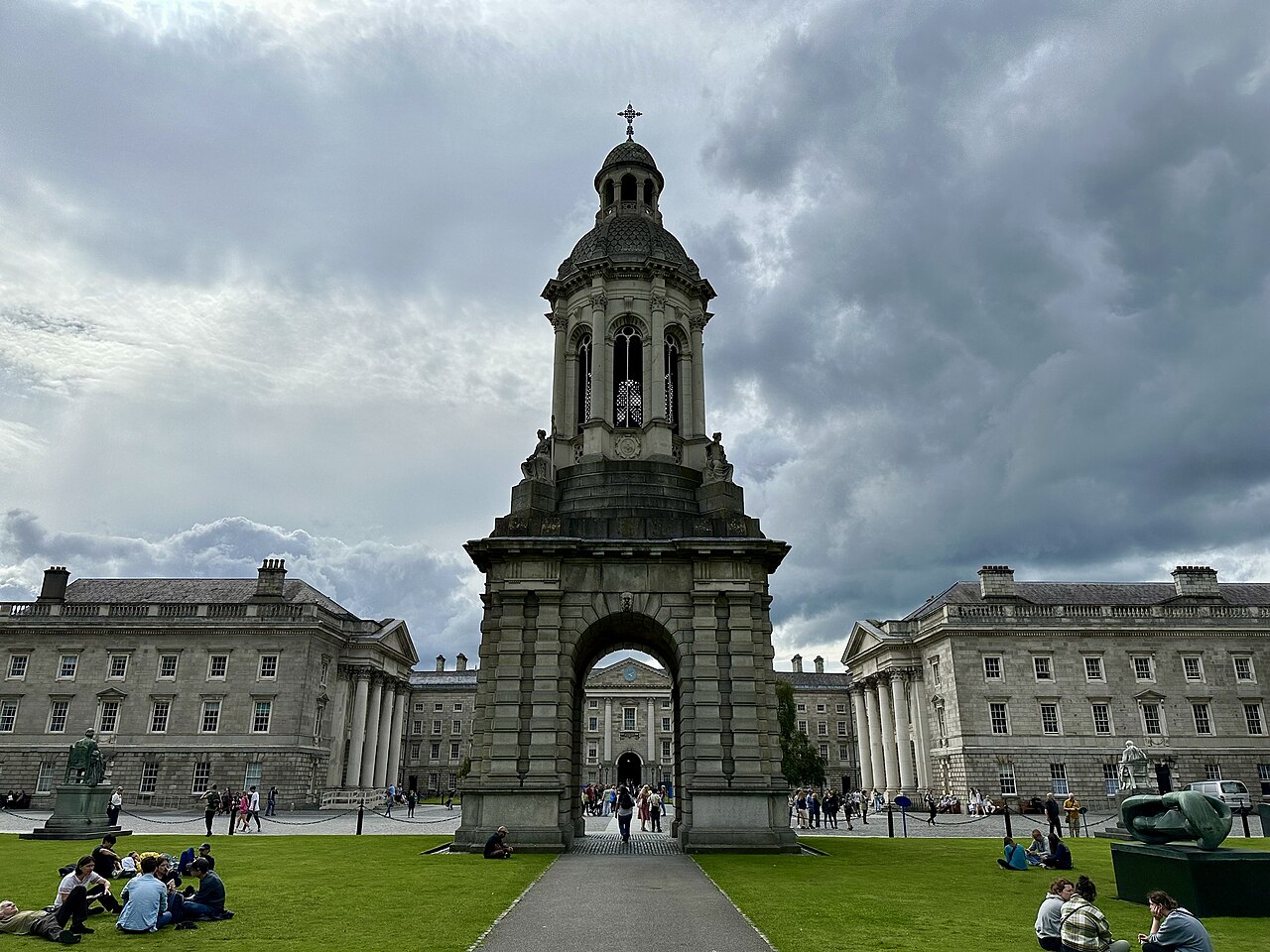
Trinity begins the literary route before the walk along Grafton Street to St Stephen’s Green and MoLI.
Photo: Thoslee · CC BY-SA 4.0 · 2023 · image resized.Photo source and license
Source: https://commons.wikimedia.org/wiki/File:Dublin_-_Trinity_College_Dublin.jpegLicense: https://creativecommons.org/licenses/by-sa/4.0
Image processing: Miniatura de 1280 px do Wikimedia Commons; sem alteração de conteúdo.
Day 2: gold, Viking remains and painting
Begin the second day at the National Museum of Ireland — Archaeology on Kildare Street. Admission is free, and three highlights can help give your visit a focus: The Treasury, Ór — Ireland’s Gold and Viking Ireland. You will see treasures, gold objects and Viking remains that provide context for your encounter with medieval Dublin on the final day.
Next, head to the National Gallery and take a break at the Gallery Café. The official guide places the café on level 0 of the Millennium Wing, with the most direct access from Clare Street. We suggest stopping there between the two museums, to sit down and eat before entering the painting galleries; check what service is available on your chosen date.
At the gallery, admission to the permanent collection is free, and individual visitors do not need to book. Use Jack B. Yeats’s The Liffey Swim as a starting point for discovering Irish painting, and also look for Caravaggio’s The Taking of Christ and Vermeer’s Woman Writing a Letter, with her Maid. All three works feature among the collection’s official highlights, but you will need to confirm whether they are on display on your chosen date.
The order changes if this day falls on a Sunday or Monday: Archaeology does not open until 13:00, so visit the National Gallery first, according to its opening hours on that date, and leave archaeology for the afternoon. Temporary exhibitions at the gallery may require a separate ticket. For anyone in the city between 2 and 16 November 2026, the Atrium Creative Space has an announced closure and should not be included in the itinerary.
Day 3: history and art in Kilmainham
Devote this day to Kilmainham, beginning with your booked visit to Kilmainham Gaol. The former prison operated between 1796 and 1924 and is linked to the rebellions and the formation of modern Ireland, according to the Office of Public Works. This is a chance to understand political history in a place that played a part in it; organise the rest of your sightseeing around your ticket time.
Continue to IMMA, housed in the Royal Hospital Kilmainham, and take a food break at Fruition. The museum’s official website places the indoor café in the underground spaces beside the former cellars and highlights its use of local ingredients. There is also a coffee outlet in the courtyard, but it should not be treated as offering the same service as the indoor café.
In the afternoon, combine IMMA’s galleries with the formal gardens. General admission and most exhibitions are free, and the site lets you alternate contemporary art with outdoor spaces without adding another area to the day. If you cannot get a prison ticket, this is a practical alternative: spend more time in IMMA’s own exhibitions and gardens.
Before settling on a date, check the calendar: IMMA closes on Mondays, except bank holidays, and opens later on Wednesdays. The indoor Fruition café also closes on Mondays. If the combination does not work, swap this day with Howth, keeping your prison booking and checking transport services.
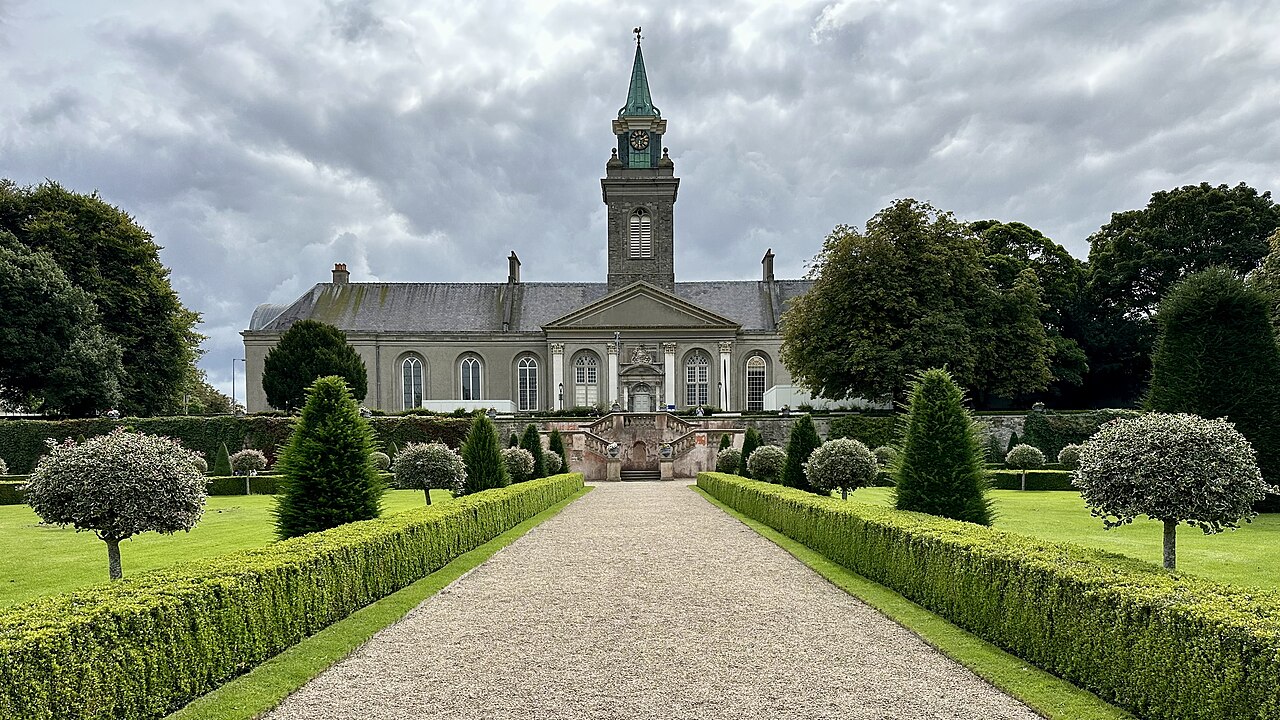
On your Kilmainham day, also set aside time for IMMA’s gardens and galleries.
Photo: Thoslee · CC BY-SA 4.0 · 2023 · image resized.Photo source and license
Source: https://commons.wikimedia.org/wiki/File:Irish_Museum_of_Modern_Art,_Dublin.jpegLicense: https://creativecommons.org/licenses/by-sa/4.0
Image processing: Miniatura de 1280 px do Wikimedia Commons; sem alteração de conteúdo.
Day 4: greenhouses and life stories in Glasnevin
Leave the centre for a morning at the National Botanic Gardens in Glasnevin. Admission is free, and the Curvilinear Range and Great Palm House greenhouses are two landmarks to guide your visit. The pleasure of this day lies in taking time to observe the botanical collections and greenhouse architecture, without relying on the promise of particular plants being in bloom.
In the afternoon, combine the gardens with Glasnevin’s Irish History Tour. The tour introduces the graves of Michael Collins, Countess Markievicz and Charles Stewart Parnell, as well as Daniel O’Connell’s crypt. After Kilmainham Gaol, these stories help put names and personal histories to events in Ireland.
Choose your session before organising the journey and arrive 30 minutes early, as recommended by Dublin Cemeteries Trust. The ticket includes the indoor Extra-ordinary Lives exhibition, which rounds out the visit. If the available session is in the morning, reverse the order; between November and February, the gardens close at 16:30, so leave enough time to visit them before then.
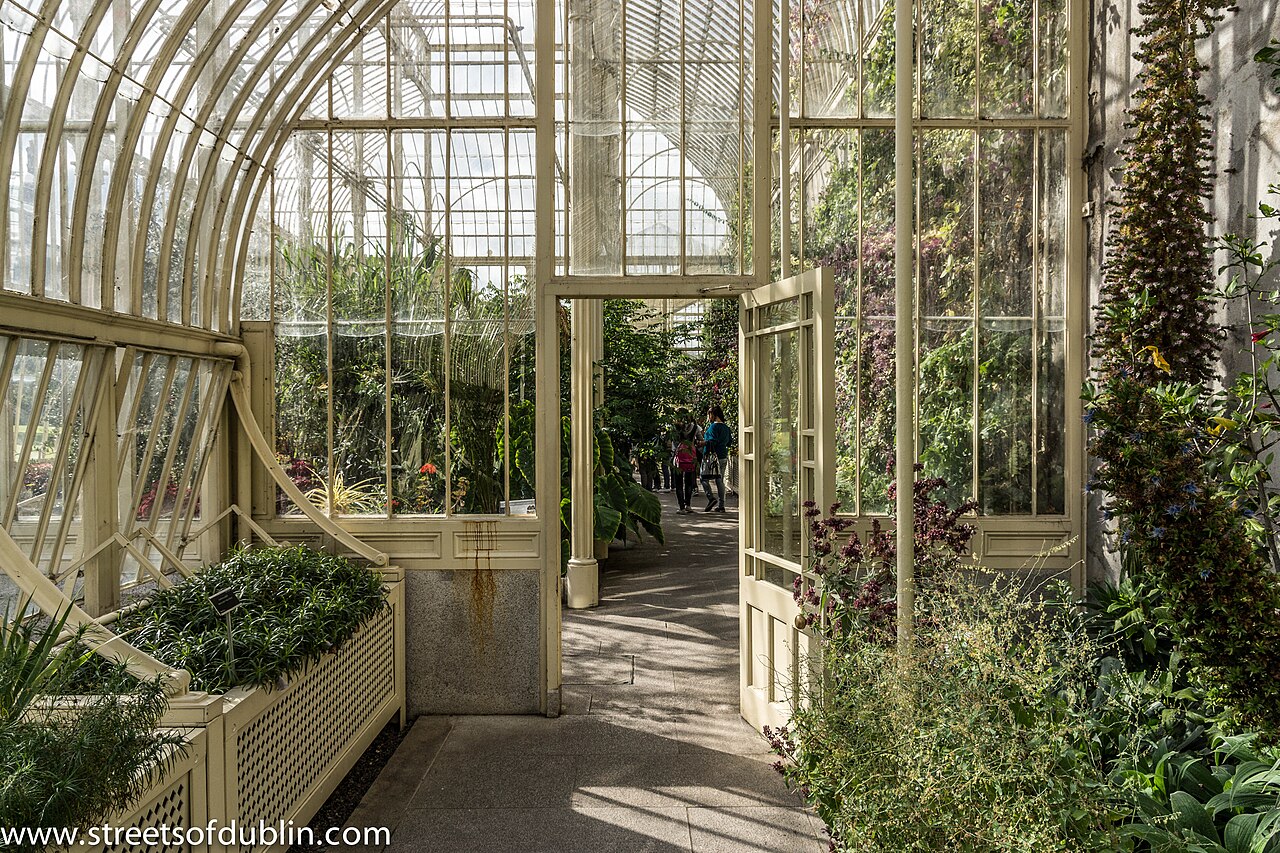
The greenhouses are part of the morning in Glasnevin, before exploring Irish history at the cemetery.
Photo: William Murphy · CC BY-SA 2.0 · 2012 · image resized.Photo source and license
Source: https://commons.wikimedia.org/wiki/File:Botanic_Gardens_In_Glasnevin_(Dublin)_(7951823690).jpgLicense: https://creativecommons.org/licenses/by-sa/2.0
Image processing: Miniatura de 1280 px do Wikimedia Commons; sem alteração de conteúdo.
Day 5: harbour, sea and a good food stop in Howth
Set aside a full day for Howth, travelling from Dublin by DART. The rail operator confirms that the station is served; check the train’s destination and the service on your chosen date before boarding. You do not need to include a long hike to make the day trip worthwhile: the harbour, East Pier and village already provide a clear route.
On arrival, walk around the harbour and follow East Pier to the lighthouse, a route featured in the official Visit Dublin guide. We suggest doing this before lunch, using the morning to explore the harbour area without a restaurant booking interrupting your walk.
For a meal, King Sitric Seafood Bar is on East Pier and specialises in Irish fish and seafood. Its own website lists indoor seating, a covered terrace, daily opening from noon and the option to book. This is the day’s sit-down food stop; confirm the opening hours and choose from the available menu, without counting on a particular species or dish.
After lunch, continue through the village before returning to the station. If the cliffs are your priority, the official guide lists Howth Adventures and Hidden Howth Experiences as tour options: check the route and duration, and organise lunch around your chosen activity. If conditions are unsuitable for the coastal outing, swap Howth with the Archaeology and National Gallery day, taking the museums’ opening hours into account.
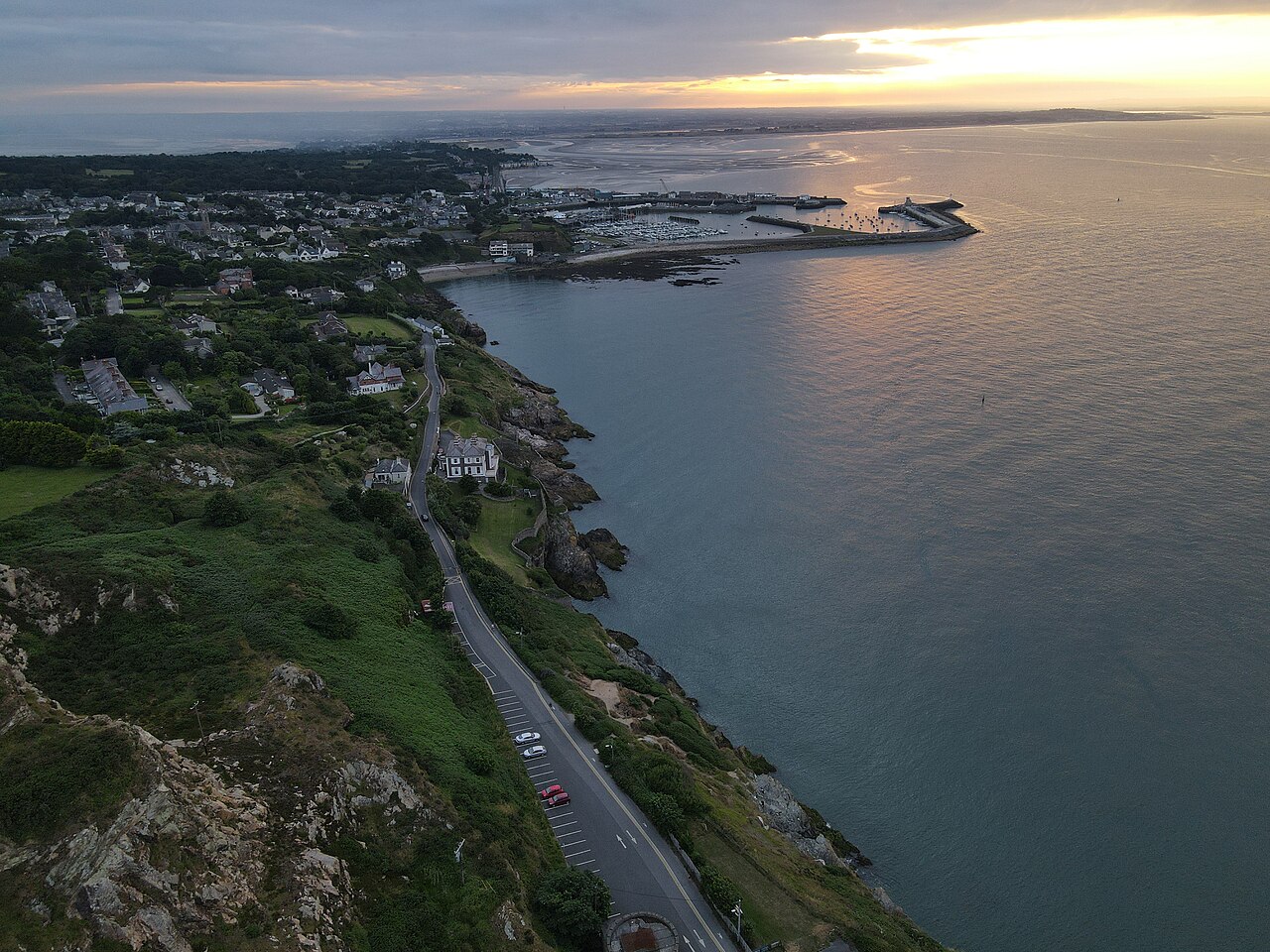
The harbour anchors the Howth outing: a walk along East Pier, lunch and a stroll through the village.
Photo: Jonjobaker · CC BY-SA 4.0 · 2021 · image resized.Photo source and license
Source: https://commons.wikimedia.org/wiki/File:County_Dublin_-_Howth_Harbour_-_20210715211534.jpgLicense: https://creativecommons.org/licenses/by-sa/4.0
Image processing: Miniatura de 1280 px do Wikimedia Commons; sem alteração de conteúdo.
Day 6: medieval Dublin and a walk along the Liffey
Begin at Christ Church Cathedral, paying attention to the nave, medieval floor and crypt. The cathedral offers guided and self-guided visits and remains an active place of worship, so check the visiting arrangements for your chosen date before finalising the time. It is the most direct choice for anyone interested in the building and its historic spaces.
Combine it with Dublinia to explore its interpretation of the Viking and medieval city. The official tourism website describes exhibitions and archaeological objects from the Wood Quay excavations. The climb up St Michael’s Tower has 96 steps: treat it as an optional part of the visit, rather than something you must do to complete the day.
A combined ticket with Christ Church is available, but visiting both is not essential. We suggest keeping the cathedral if architecture and the crypt are your priorities, or choosing Dublinia if you prefer its presentation of medieval life. This choice reduces the number of paid visits and leaves more time for the walk that follows.
Head to the Liffey and cross the Ha’penny Bridge, a pedestrian bridge built in 1816. The riverside walk brings the daytime route to a close after the indoor visits. In the evening, the Cobblestone in Smithfield can round off the day with traditional music, depending on the session listed by the pub.
An evening of traditional music in Smithfield
To hear traditional Irish music, include the Cobblestone at 77 King Street North, on the north side of Smithfield Square. The pub publishes its own music sessions. In this itinerary, it follows the walk along the Liffey, but it is worth moving it to another evening if the programme fits your schedule better.
One simple detail affects your planning: the Cobblestone does not serve food or accept table reservations. Eat before you go, check the session and do not count on a guaranteed seat. That way, you arrive knowing that the stop is devoted to music, without relying on the pub for dinner.
Two events to consider in November and December 2026
A check of the official events calendar identified the Dublin Book Festival from 4 to 8 November 2026, with author talks, book launches, literary walks and activities at various venues across the city. The festival was already underway on the recorded research date. If you are in Dublin before it ends on 8 November 2026, choose an activity that fits your Trinity and MoLI day; check the venue, time and ticket requirements, as not all events are necessarily free.
Another option has two specific dates: Whiskey & Tales at Dublinia: Medieval Dublin After Dark, on 26 November 2026 and 10 December 2026, from 17:30 to 19:00, for people over 18. The activity combines a visit to the medieval exhibitions with a tasting led by Whiskey Island in Synod Hall. If it coincides with your trip and places are available, replace the daytime visit to Dublinia with this session and move your evening at the Cobblestone to another date.
These events are date-specific additions, not attractions available during every stay. Outside these dates, keep the regular visits to Trinity, MoLI and Dublinia, and consult the music programme published by the Cobblestone.
Turn your choices into a checklist and budget
Once you have decided the order of the days, use Mala Inteligente to turn your sightseeing plans into a checklist: consider the walks through St Stephen’s Green, the gardens of Glasnevin and the outdoor day in Howth when choosing clothes and footwear for the trip’s weather forecast. Also organise your booking confirmations and times for Trinity, Kilmainham Gaol and Glasnevin, so you do not have to piece your reservations together each morning.
To estimate your budget, separate accommodation, transport, food and paid visits, remembering that Archaeology, the Botanic Gardens and the National Gallery’s permanent collection have free admission; at IMMA, general admission and most exhibitions are also free. This distinction helps you decide where to set aside money for a sit-down meal or a particular activity.
In Viajandar’s cost calculator, enter your own illustrative amounts in Brazilian reais, which you can edit. If your research gives prices in euros, convert them separately before filling it in: the tool does not provide currency conversion or international exchange rates, and its reference amounts do not represent Dublin prices. The result helps you organise an estimate, which you can adjust as you obtain prices for your travel dates.
Which option suits you?
| Option | A good fit if… | What to consider |
|---|---|---|
| Stay around St Stephen’s Green and Grafton Street | This suits travellers who want to begin their Trinity, MoLI and museum days with much of the sightseeing concentrated in the centre. | It is the most direct fit for the first two days; Kilmainham, Glasnevin and Howth still require transport planning. |
| Compare accommodation on Gardiner Street, near Connolly | This suits travellers who place greater importance on rail access and the day in Howth. | Being near the station helps with planning, but you need to check each property’s address and the route to sights south of the Liffey. |
| Visit Kilmainham Gaol and IMMA on the same day | This suits travellers who want to understand Irish political history and also see contemporary art. | The prison requires advance booking; IMMA has opening restrictions on Mondays and Wednesdays. |
| Explore Howth harbour, East Pier, King Sitric and the village | This suits travellers who want a day by the sea with a walk and a sit-down lunch. | You explore the harbour area without including a long cliff walk; the pier and harbour are still outdoor outings. |
| Take a cliff tour with Howth Adventures or Hidden Howth Experiences | This suits travellers who want to spend more time enjoying the coastal scenery. | You need to check the route, duration and conditions with the operator; plan lunch around your chosen walk. |
| Choose between Christ Church and Dublinia | This suits travellers who prefer fewer paid visits on the final day. | Christ Church focuses on architecture and the crypt; Dublinia offers an interpretation of the Viking and medieval city. After either one, keep the walk to the Ha’penny Bridge. |
Your itinerary, ready to save
Day 1 — books and the city centre on foot
Visit the Book of Kells Experience at Trinity in the morning, then walk along Grafton Street and through St Stephen’s Green. Take a break at the Commons Café and visit MoLI in the afternoon.
Prefer an alternative? At MoLI, choose the Historic House Tour if the house’s architecture interests you more; check the session before adjusting your Trinity time slot.Day 2 — archaeology and painting
Visit the National Museum of Ireland — Archaeology on Kildare Street, then take a break at the Gallery Café. Devote the afternoon to the National Gallery’s permanent collection.
Prefer an alternative? If this falls on a Sunday or Monday, schedule Archaeology from 13:00 onwards and visit the National Gallery first, according to its opening hours on that date.Day 3 — Kilmainham
Take your booked tour of Kilmainham Gaol, have a meal at Fruition, then explore IMMA’s galleries and gardens at the Royal Hospital Kilmainham.
Prefer an alternative? Without a ticket for Kilmainham Gaol, focus the day on IMMA’s galleries and gardens. If the museum is closed, swap the date with your trip to Howth.Day 4 — Glasnevin
Visit the National Botanic Gardens in the morning, paying particular attention to the greenhouses. Take the Irish History Tour in the afternoon, arriving 30 minutes early; the Extra-ordinary Lives exhibition is included in the ticket.
Prefer an alternative? If the available Irish History Tour session is in the morning, start with Glasnevin and visit the Botanic Gardens afterwards, allowing for their 16:30 closing time between November and February.Day 5 — Howth
Take the DART to Howth, then walk around the harbour and along East Pier to the lighthouse. Have lunch at King Sitric Seafood Bar and stroll through the village before returning to Dublin.
Prefer an alternative? For a longer walk, check Howth Adventures or Hidden Howth Experiences and plan lunch around the route. To keep walking to a minimum, stick to the harbour, East Pier and village.Day 6 — medieval city, river and music
Visit Christ Church and Dublinia, then walk to the Liffey and cross the Ha’penny Bridge. After a meal, head to a traditional music session at the Cobblestone, according to its programme.
Prefer an alternative? Choose just Christ Church or Dublinia if you would like a more relaxed afternoon. On 26 November 2026 or 10 December 2026, the Whiskey & Tales session can replace the daytime visit to Dublinia; in that case, move the Cobblestone to another evening.Before you go
- Allow six full days for sightseeing, excluding arrival and departure. Use your arrival day to reach your accommodation and settle in.
- Book Kilmainham Gaol through the official ticket service and arrange your Book of Kells time slot before fixing the order of the days.
- Check the weekly schedule: Archaeology opens at 13:00 on Sundays and Mondays; IMMA closes on Mondays, except bank holidays, and opens later on Wednesdays.
- At the National Gallery, distinguish between the permanent collection and temporary exhibitions. The Atrium Creative Space has an announced closure from 2 to 16 November 2026.
- In Glasnevin, choose your Irish History Tour session and arrive 30 minutes early. Between November and February, the National Botanic Gardens close at 16:30.
- For Howth, check the DART destination, the service on your chosen date and walking conditions. If you need assistance boarding, the operator advises arranging it in advance.
- Check the opening hours of the Commons Café, Gallery Café and Fruition alongside your visits. For King Sitric, check booking options and the menu; the research does not establish which dishes or prices will be available on your chosen date.
- Check the Cobblestone’s session before setting out: there is no food or table booking, and a visit does not guarantee a seat.
- If your trip coincides with one of the events mentioned, check the ticket requirements and exact session. The Dublin Book Festival ends on 8 November 2026; Whiskey & Tales takes place on the two specific dates given in the article.
- Check visiting restrictions at Christ Church, as it is an active place of worship. At Dublinia, treat the 96-step climb up St Michael’s Tower as optional.
- When choosing accommodation, check the actual address and map out the journeys to Trinity, Kilmainham, Glasnevin and your departure station for Howth.
Questions to help you decide
Do the six days include arrival and departure?
These are six full days of sightseeing, excluding arrival and departure. The itinerary covers Dublin and a day trip to Howth; other parts of Ireland need their own days.
Do I need a car for this itinerary?
You can follow this itinerary using a combination of walking, buses, Luas and DART. Use the TFI journey planner for routes and check the rail service for your Howth date. You can take an occasional taxi for comfort without needing to hire a car.
Which bookings should I prioritise?
Start with Kilmainham Gaol, which requires advance booking, and your Book of Kells time slot. Then fit in Glasnevin’s Irish History Tour and any date-specific events. Individual visitors do not need to book for the National Gallery’s permanent collection.
Is Howth worth visiting without going on a hike?
You can build the day around the harbour, East Pier as far as the lighthouse, lunch at King Sitric and a stroll through the village. The cliffs are an additional option. If the weather makes an outdoor outing inadvisable, swap Howth with the archaeology and National Gallery day.
Will I find Trinity’s library full of books?
The official experience includes the Long Room, but the page consulted states that the books have been removed for conservation, except for the first four sets of shelves at the entrance. Go for the visit as a whole, which also includes the Book of Kells and a digital exhibition.
Can I have dinner at the Cobblestone during the music?
No. The Cobblestone itself states that it does not serve food or accept table reservations. Plan to eat before the music session and do not count on a guaranteed seat.
Ready to start planning?
Turn your six days of sightseeing into a checklist in Mala Inteligente ↗Build an estimate in Brazilian reais using your own amounts in the cost calculator ↗A preview of your next trip
See the destination on video, then return to the itinerary to plan your trip at your own pace. Video in Portuguese.
Sources and editorial review
This is a researched guide, not a personal account of a visit. The itinerary suggestions are editorial recommendations. Confirm opening arrangements, prices and conditions close to your trip.
- Dublin Airport — buses to Dublin · checked 2026-11-06
- Visit Dublin — getting around and journey planning · checked 2026-11-06
- Visit Dublin — first visit and areas to stay · checked 2026-11-06
- Visit Trinity — Book of Kells Experience · checked 2026-11-06
- National Museum of Ireland — Archaeology · checked 2026-11-06
- National Gallery of Ireland — visiting and Gallery Café · checked 2026-11-06
- National Gallery of Ireland — collection highlights · checked 2026-11-06
- MoLI — visiting, literature and the historic house · checked 2026-11-06
- MoLI — The Commons Café · checked 2026-11-06
- Heritage Ireland — St Stephen’s Green · checked 2026-11-06
- Heritage Ireland — Kilmainham Gaol Museum · checked 2026-11-06
- IMMA — visitor information · checked 2026-11-06
- IMMA — Fruition Café · checked 2026-11-06
- Heritage Ireland — National Botanic Gardens, Glasnevin · checked 2026-11-06
- Dublin Cemeteries Trust — Irish History Tour · checked 2026-11-06
- Visit Dublin — things to do in Howth · checked 2026-11-06
- Iarnród Éireann — Howth station · checked 2026-11-06
- King Sitric — Seafood Bar · checked 2026-11-06
- Christ Church Cathedral — visiting · checked 2026-11-06
- Visit Dublin — Dublinia · checked 2026-11-06
- Visit Dublin — Ha’penny Bridge · checked 2026-11-06
- Visit Dublin — Dublin Book Festival 2026 · checked 2026-11-06
- Visit Dublin — Whiskey & Tales at Dublinia · checked 2026-11-06
- The Cobblestone — traditional music in Smithfield · checked 2026-11-06